


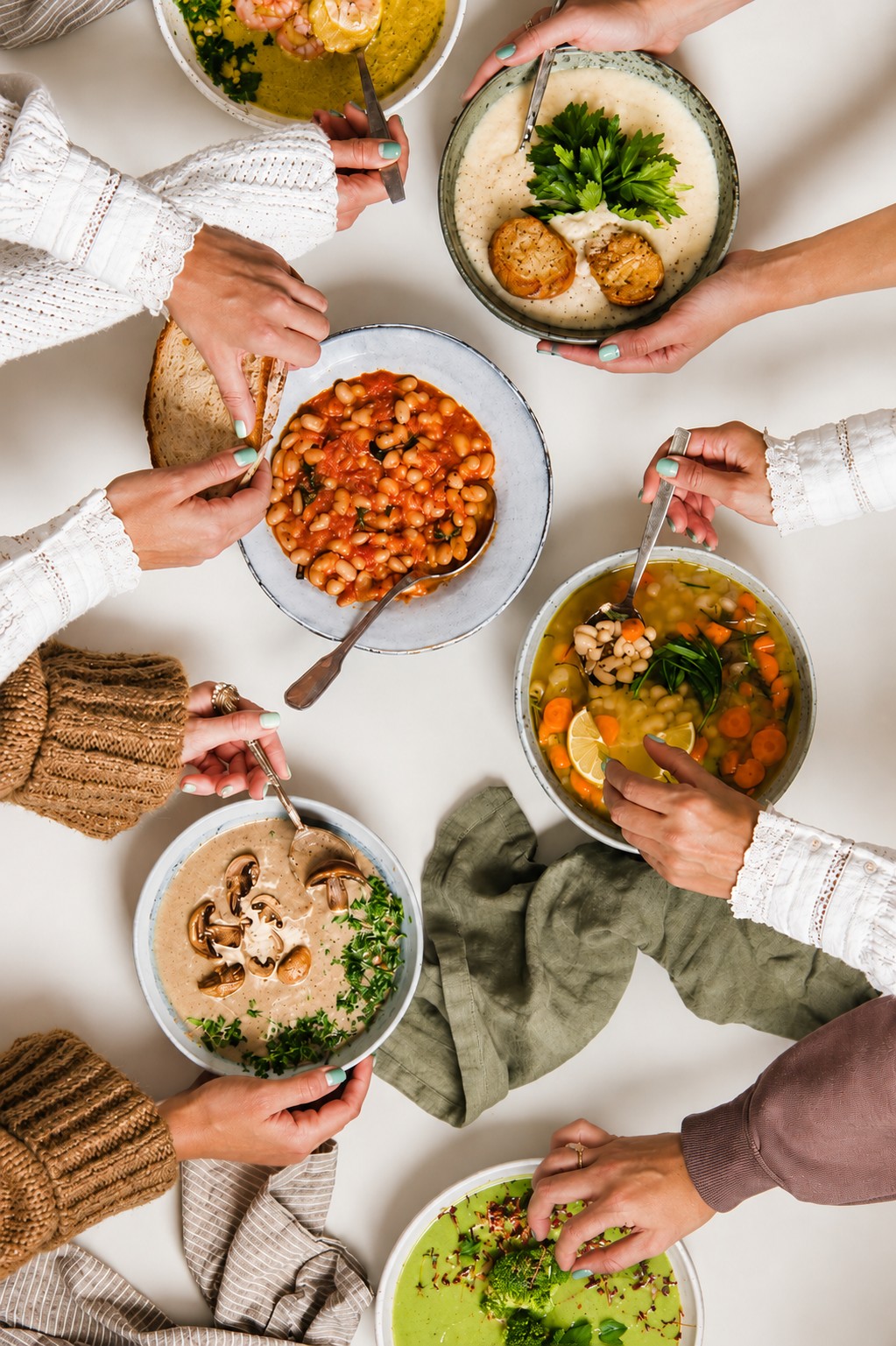
How to Host a Soup Dinner or Soup Swap Gathering
Soup night is one of the easiest gatherings to host because the main dish can be made ahead, kept warm, and served without complicated plating. To host an easy soup dinner, make one or two soups ahead of time, add bread and a simple salad, and let everyone serve themselves. For a soup swap, ask each guest to bring one homemade soup in enough portions to taste and exchange, then provide containers, labels, and a few easy sides.
The menu is already doing most of the work. You just need a simple plan and people to share it with.
If you want help keeping the guest list, food, timing, and shared responsibilities in one place, Partytrick can help you turn the idea into an actual plan instead of a loose text thread that gets buried by Thursday.

Decide: Soup Dinner or Soup Swap?
A soup dinner and a soup swap are related, but they serve slightly different purposes.
A soup dinner is the easier version. The host makes one or two soups, sets out bread, salad, drinks, and maybe dessert, then lets people serve themselves. Guests can bring something if they want, but the meal is mostly host-led. This works well for a smaller group, a casual fall dinner, a weeknight gathering, or a night when you want everyone around the table without building a full menu.
A soup swap is more interactive. Each guest brings a batch of soup, everyone tastes a few during the gathering, and people take portions home at the end. It is part dinner, part exchange, and part very practical group activity. A soup swap works well if your friends like contributing, if you want a recurring seasonal tradition, or if everyone would appreciate going home with tomorrow’s dinner taken care of.
Both versions work because soup is forgiving. Pick the format that feels easiest for your group.
Pick Soups That Work Well for a Crowd
The best soup for a gathering is not the fanciest one. It is the one that is happy sitting in a pot until everyone is ready to eat.
Look for soups that can be made ahead, reheat well, scale easily, travel reasonably well, and do not need delicate last-minute finishing. This is not the night for anything that has to be plated immediately or garnished with five tiny things before serving.
Chili is technically soup-adjacent, but it is built for this format. It is hearty, easy to make in a large batch, and flexible enough for toppings. Tomato soup is simple and familiar, especially when paired with grilled cheese, focaccia, or a crusty loaf. Butternut squash soup brings a seasonal fall dinner feeling and can usually be made the day before.
Chicken tortilla soup works well if you want a toppings moment. White bean soup is hearty without feeling too heavy. Potato leek soup is smooth, calm, and easy to serve. Lentil soup is affordable, filling, and often a good vegetarian option. Chicken noodle soup feels familiar and family-friendly. Sausage and kale soup gives the meal more weight if soup is the full dinner. Minestrone is helpful for mixed groups because it can be vegetable-forward, filling, and easy to adapt.
If you are hosting a group with different dietary needs, make one option vegetarian or dairy-free when possible. You do not need to make every soup work for every person, but it helps to have at least one soup that more guests can eat.
If You Are Serving More Than One Soup, Make Them Different
If you are making two soups for dinner, or organizing a soup swap, think about contrast.
Two creamy soups can feel repetitive. Three tomato-based soups can make the table feel less interesting than expected. Four chilis may still taste good, but they turn the swap into a chili cook-off whether you meant to host one or not.
A better mix might include one creamy soup, one brothy soup, one hearty soup, and one vegetarian soup. For a soup swap, you can give guests loose categories when they RSVP. Have everyone claim a different kind of soup: one vegetarian, one hearty chili, something brothy, and a creamy fall favorite.
This is where a planning tool helps. Use Partytrick to keep track of who is coming, what people are bringing, and which parts of the meal are already covered. Everyone brings something to the table, but the host still needs a clean view of the plan.

What Should You Serve With Soup?
Use this formula: soup, bread, something fresh, and one easy dessert.
Bread is the obvious choice because it makes soup feel like dinner. Choose a crusty loaf, garlic bread, cornbread, dinner rolls, or focaccia. If you are serving tomato soup, grilled cheese can become the main side. If you are serving chili, cornbread makes sense. If the soup is lighter, bread and salad will help round it out.
For salad, keep it simple. Mixed greens with vinaigrette, kale salad, Caesar, or apple and arugula salad all work. The salad is there to add freshness, not create another cooking project.
If you want something extra, match it to the soup. Quesadillas work with tortilla soup. Baked potatoes can sit alongside chili. Simple sandwich halves are useful if you are feeding a larger crowd or want the meal to feel more substantial.
Dessert should be easy. Cookies, brownies, apple crisp, cake, or store-bought pie all make sense. Soup is already dinner. You do not need to create another dinner around it.
If you are newer to hosting and want a broader planning framework, Partytrick’s Party Planning Checklist for Beginners Who Have No Idea Where to Start is a useful companion for thinking through guest count, food, timing, and the small details that make the night easier.
Build a Simple Soup Topping Bar
A soup topping bar can make the gathering feel a little more special without adding much work. The key is restraint.
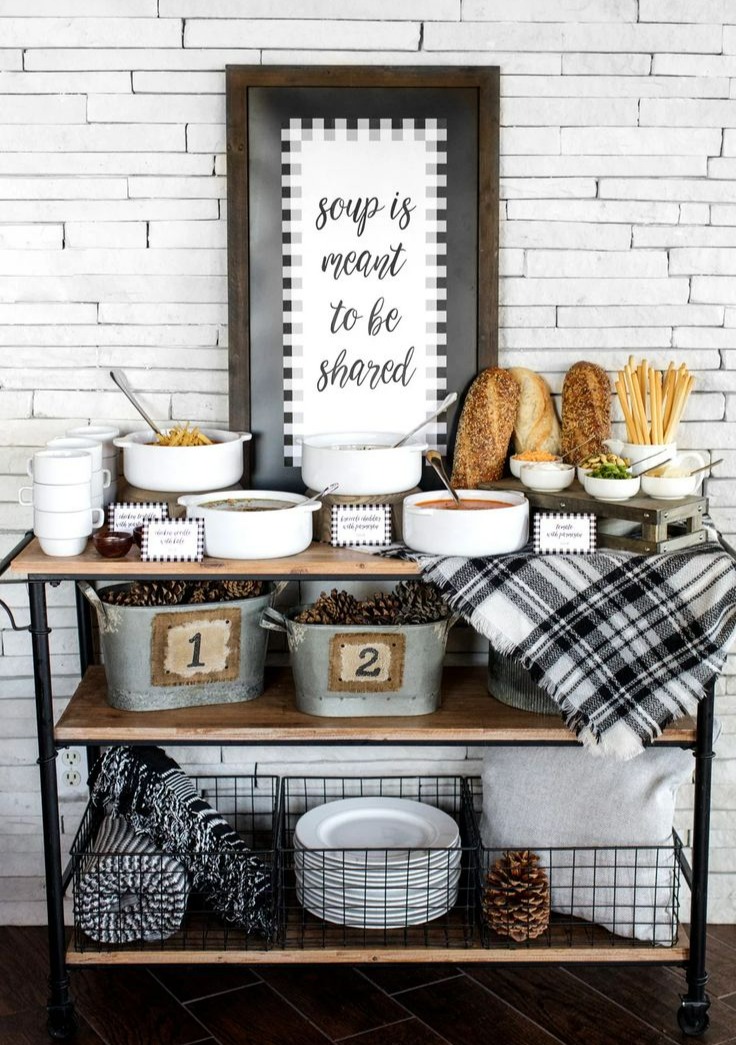
Choose toppings based on the soups you are serving. For chili or tortilla soup, set out shredded cheese, sour cream or Greek yogurt, tortilla strips, avocado, green onions, and chopped herbs. For tomato soup, try croutons, parmesan, basil, chili oil, or crackers. For potato leek soup, bacon, chives, Greek yogurt, and cracked pepper are plenty.
Three or four good toppings are enough.
The goal is to let people finish their own bowl in a way that tastes good, not to cover the counter with every topping in the grocery store.
How to Host a Soup Swap
For a soup swap, ask each guest to bring one batch of soup. Tell them how many people are participating so they can bring enough for tasting and swapping. If the group is six to eight people, each person might bring enough for everyone to taste a small serving, plus a few extra portions to exchange.
Ask guests to bring a ladle if their soup needs one, and have everyone share basic ingredient and allergen information. The host can provide tasting bowls or cups, spoons, labels, containers if guests are not bringing their own, bread or snacks, drinks, and a clear space for each soup.
The evening can be simple:
- Guests arrive and set out their soups.
- Each soup gets labeled.
- Everyone tastes small portions.
- People eat, talk, and compare favorites.
- Leftovers are portioned into containers.
- Everyone goes home with a few different soups.
- The swap is basically dinner plus future dinner.
Set Clear Soup Swap Rules Ahead of Time
Soup swaps work best with a little structure. You do not need a long list of rules, but you do need enough information that nobody shows up with one tiny quart for ten people.
Tell guests how much soup to bring, if it should arrive hot or chilled, if they need to bring containers, how many people are participating, if soups should be freezer-friendly, and if any dietary restrictions need to be considered.
Labels make the whole night easier. Each soup should include the soup name, major allergens, whether it is vegetarian or vegan, the date it was made, and reheating instructions if portions are going home.
For containers, ask people to bring leakproof jars or reusable containers if they have them. Freezer-safe containers are helpful if the point is to stock everyone’s freezer for later.
Think Through How You Will Keep Soup Hot
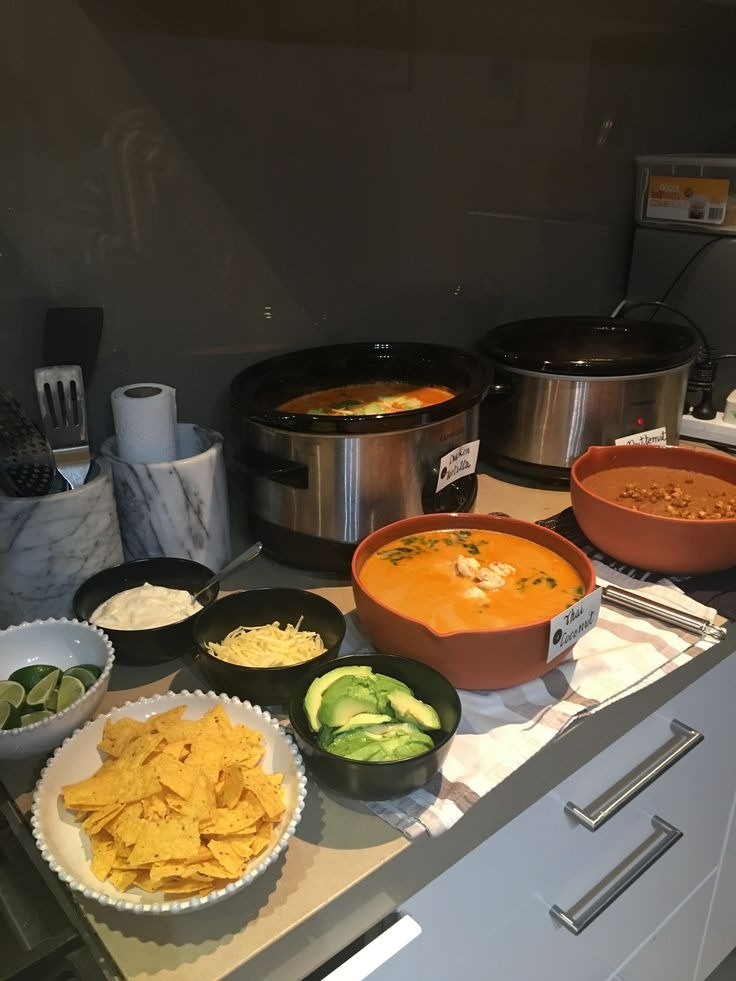
Warm soup sounds simple until you have four pots, two outlets, one stove, and no counter space. Think through the setup before guests arrive.
Slow cookers are helpful because they hold soup at a steady serving temperature. Dutch ovens can stay on low heat if you have space on the stove. Pots on the stove work for a smaller soup dinner. Insulated soup containers can help guests transport soup for a swap.
For multiple soups, check outlet availability, extension cord safety, counter space, ladles, and trivets. Avoid crowding every pot onto the stove if people will also be moving through the kitchen.
For food safety, keep soup out of the temperature danger zone, properly cool and store leftovers, and reheat thoroughly before serving or sending home.
You Probably Do Not Need Matching Soup Bowls
Use what you have.
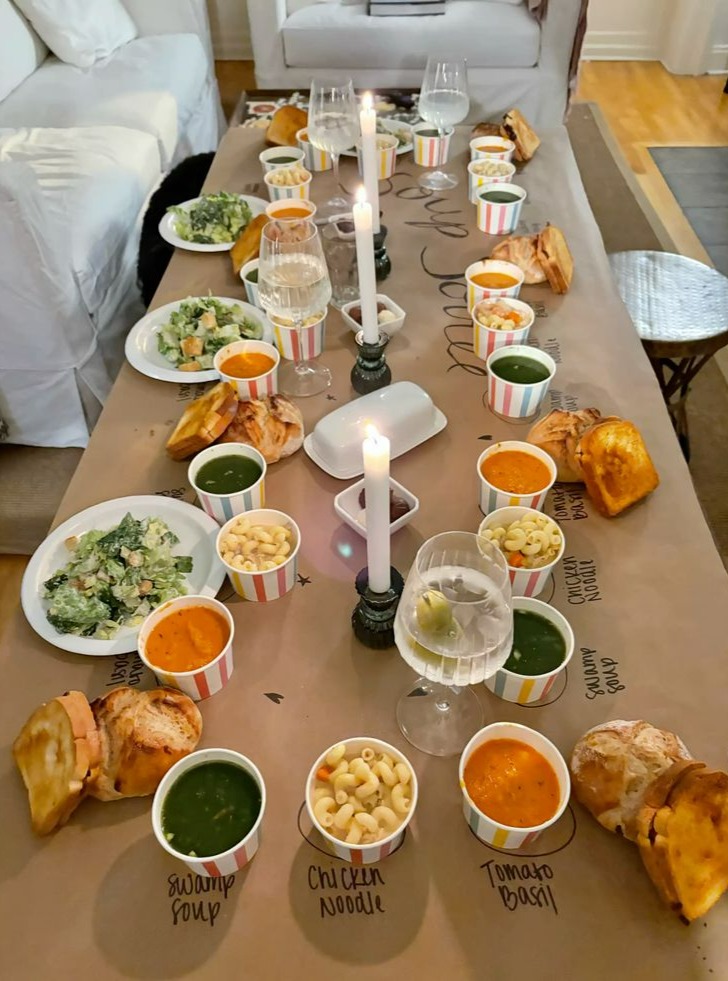
For a larger crowd, mix bowls, use mugs for smaller servings, or set out compostable bowls if that makes sense for your gathering. For a soup swap, small tasting cups are often more useful than full bowls because people will want to try several soups.
The gathering does not need to look like a styled editorial shoot. Nobody has ever left soup night complaining that the bowls did not match.
Make the Table Feel Fall Without Decorating the Whole House
Soup already does a lot of atmospheric work. Add a few small touches if you want the table to feel more seasonal, but keep it manageable.
Candles, linen napkins, a small vase of branches, a bowl of apples or pears, wood serving boards, or a few small pumpkins can be enough. You are not building a set. You are making a table feel considered.
The soup, bread, and people around the table are doing most of the atmosphere work.
Do Not Forget Drinks
Drinks should be simple. Sparkling water, apple cider, tea, and still water are easy options. A zero-proof aperitivo can feel a little more festive without asking you to mix drinks all night.
If your group drinks alcohol, wine, beer, or hard cider all work well with soup. You can also point guests toward a casual bottle if someone asks what to bring. For a more structured drink-focused gathering another time, Partytrick’s How to Host a Wine and Cheese Night at Home can help you plan a night where the drinks are the main event.
For soup night, avoid turning a simple dinner into a complicated cocktail project.
Give the Night a Loose Timeline
You do not need a formal itinerary, but a loose rhythm helps the night feel easy.
For a soup dinner, guests might arrive around 6:30 p.m. for drinks and a small snack. Serve soup around 7:00 p.m. Bring out dessert around 7:45 p.m. After that, let people keep talking, refill bowls, or move to the couch.
For a soup swap, guests can arrive around 6:30 p.m. and set up their soups. Start tasting around 7:00 p.m. Around 8:00 p.m., begin portioning soup into containers. Dessert and hanging out can happen after the practical part is done.
The point is not to control the night. It is to keep the swap from becoming a counter full of unlabeled containers and lukewarm soup.
Do Most of the Work Before Anyone Arrives
This is one of soup night’s biggest advantages.
The day before, make the soup if the recipe allows, confirm the guest count, buy bread, salad, drinks, and dessert, gather bowls and spoons, prep toppings, and make room in the fridge.
A few hours before, slowly reheat the soup, prep the salad, slice the bread, chill the drinks, and set out serving pieces.
Thirty minutes before, put soup on low heat, set out bowls and spoons, put toppings in small bowls, light candles, put on music, and stop doing things.
If you are still chopping vegetables when the doorbell rings, soup night has missed the point.
Let People Take Something Home
Even if you are hosting a regular soup dinner, sending people home with extra soup is a generous, useful ending. If there is enough left, offer a container. If not, freeze leftovers for yourself.
For a soup swap, make sure containers are leakproof, labeled, and freezer-safe if needed. Encourage reusable containers where practical, and keep a marker and tape nearby so people can label what they are taking.
A good soup night often lasts longer than dinner. Sometimes it becomes lunch the next day.
Consider Making Soup Night Recurring
Soup night is well-suited to becoming a tradition because it is inexpensive, flexible, and requires little reinvention. You can host it the first Sunday of every month, make it a monthly soup swap, rotate hosts, pair it with book club, add it to football season, or turn it into a game night.
Some of the best gatherings are the ones that become ordinary enough to happen again.
Soup Night Checklist
- Decide dinner or swap.
- Pick one or two soups.
- Ask about dietary restrictions.
- Decide who is bringing what.
- Buy bread.
- Add a simple salad.
- Choose a few toppings.
- Buy drinks.
- Add one easy dessert.
- Gather bowls and spoons.
- Check slow cooker and stove space.
- Make soup ahead.
- Reheat before guests arrive.
- Set out toppings.
- Put on music.
- Stop cooking.
Your Soup Swap Checklist
Invite a manageable group.
- Tell everyone how much soup to bring.
- Ask guests to label ingredients and allergens.
- Decide if guests bring containers.
- Set up tasting bowls or cups.
- Create space for each soup.
- Have ladles available.
- Serve bread and simple sides.
- Label all soups.
- Taste.
- Portion.
- Swap.
- Go home with tomorrow’s dinner handled.
FAQ
How do you host a soup dinner party?
Make one or two soups ahead of time, add bread, salad, drinks, and one easy dessert, then let guests serve themselves. Keep the menu simple and choose soups that reheat well.
How does a soup swap work?
Each guest brings a batch of soup. Everyone tastes small portions during the gathering, then swaps extra portions to take home. Labels and containers are the most important details.
How much soup should each person bring to a soup swap?
Ask each guest to bring enough for small tastings, plus extra portions to exchange. For a small group, one large batch is usually enough. Share the guest count ahead of time so people can plan.
What soups are best for a soup party?
Choose soups that can be made ahead and kept warm, such as chili, tomato soup, butternut squash soup, lentil soup, chicken tortilla soup, minestrone, white bean soup, and sausage and kale soup.
What do you serve with soup for dinner?
Serve bread, a simple salad, a few toppings, drinks, and one easy dessert. Grilled cheese, cornbread, focaccia, Caesar salad, cookies, brownies, and apple crisp all work well.
What should you put on a soup bar?
Choose toppings that match the soup. Good options include shredded cheese, sour cream, Greek yogurt, herbs, croutons, tortilla strips, avocado, green onions, bacon, chili oil, parmesan, and crackers.
How do you keep multiple soups warm for a party?
Use slow cookers, Dutch ovens on low heat, pots on the stove, or insulated containers. Plan outlet access, counter space, ladles, and trivets before guests arrive.
What containers are best for a soup swap?
Use leakproof containers that are easy to label. Freezer-safe containers are helpful if guests plan to save soup for later. Reusable jars or lidded containers work well when practical.
Can you make soup ahead for a dinner party?
Yes. Many soups taste better after resting overnight. Make the soup ahead, cool and store it safely, then reheat it slowly before guests arrive.
How many soups should you serve at a soup party?
For a soup dinner, one or two soups are enough. For a soup swap, each guest can bring one soup, but give loose categories so the table has variety.
Soup night doesn't need much more than a big pot, good bread, and people happy to stay for another bowl. Good soup. Good bread. Good people. That is plenty.
Turn a big pot of soup into an easy night with friends. Start planning for free with Partytrick.
More articles

Halloween Party Ideas from the Pros: How to Host a Night Guests Still Talk About
Ask a professional what makes a Halloween party work, and the answer is rarely just a pumpkin.

Halloween Party Themes for Adults That Go Beyond Costumes
Host a Halloween night built around something your friends will enjoy doing together, with costumes optional. Explore ten adult party themes, with simple food pairings and practical tips to help you choose one that fits your group, space, and budget.

Ask Partytrick: How Do I Host a Halloween Party When Half My Friends Hate Costumes?
Planning a Halloween party when half your friends hate costumes can be simple by making costumes optional and clearly stating the dress code in the invitation. You can center the evening around an activity like a movie night, game night, or pumpkin decorating so everyone feels welcome to join in on the fun.

Sign up for expert tips, exclusive content, and the 411 on the latest parties—all straight to your inbox.
Your shortcut to stress-free hosting
Spend less time coordinating and more time actually connecting.