



Ask Partytrick: How to Plan Spirit Week for the First Time: A Step-by-Step Guide
Ask Partytrick is our advice series where we answer real hosting questions with practical guidance, thoughtful ideas, and easy-to-follow tips. If you are planning your first gathering or trying to make an event feel easier to manage, we are here to help.
This week’s question:
“Help! I’ve been put in charge of Spirit Week and have no idea what I’m doing.”
You volunteered, or were volunteered, to organize Spirit Week. You know you need five days of school spirit, but you may not know what to plan, when to begin, or who should be involved.
First, take a breath. Spirit Week does not need to be complicated. The simplest way to plan it is to make a few clear decisions, give each responsibility an owner, and work backward from the event date.
A planning playbook can give first-time organizers one place to keep themes, tasks, deadlines, supplies, and responsibilities. Instead of trying to hold the whole week in your head, you can build the plan one step at a time.
Step 1: Find Out What You’re Actually Responsible For
Before you brainstorm themes, confirm the scope of the week. Every school handles Spirit Week differently, and getting clear answers now can prevent last-minute changes later.
Ask your school contact:
- What are the Spirit Week dates?
- Is the week connected to Homecoming, a pep rally, a fundraiser, or another event?
- Who must approve themes and activities?
- Is there a budget? If so, who controls it?
- What has the school done in previous years?
- Are there traditions students expect?
- What dress-code requirements apply?
- Can parents or other volunteers participate?
- Are there restrictions around food, decorations, prizes, photography, or music?
- Who manages school announcements, newsletters, and social media?
Do not assume you are responsible for everything. You may be coordinating themes while school staff manages announcements, or you may be expected to oversee the full week. Write down what belongs to you, what belongs to the school, and what still needs an owner.
Step 2: Build Your Spirit Week Team
You should not plan the entire week alone. Even a simple Spirit Week includes approvals, communication, supplies, setup, and cleanup. A small team makes those responsibilities easier to manage.
Identify people who can help with:
- Theme selection
- School approval
- Decorations
- Daily activities
- Supplies and purchasing
- Prizes
- Promotion
- Volunteer coordination
- Photography and social media
- Setup and cleanup
Each responsibility should eventually have one clear owner. More than one person can help, but one person should be responsible for making sure the task is completed.
Add assignments and due dates to your Spirit Week playbook so everyone can see what they own and when it is due. This keeps planning from disappearing into separate email threads, texts, and meeting notes.

Step 3: Choose Your Five Spirit Week Themes
For your first year, choose themes that are easy for students and families to understand. Participation is more likely when students can use clothes or accessories they already own.
Strong first-time themes are:
- Easy to explain
- Affordable to participate in
- Inclusive
- Appropriate for the school’s age group
- Different enough from one another
- Easy to promote in a short announcement or poster
A manageable five-day schedule could be:
- Monday: Pajama Day
- Tuesday: Twin Day
- Wednesday: Decades Day
- Thursday: Class Colors
- Friday: School Spirit Day
Before finalizing the schedule, check each idea against the dress code and approval process. It is also helpful to avoid themes that require expensive costumes, exclude students without a partner, or rely on cultural stereotypes. For Twin Day, for example, encourage pairs, groups, classes, or staff teams so no one is left out.
Need more options? Review our 20 School Spirit Week Ideas article and choose the five that best fit your school.

Step 4: Decide What Will Happen Each Day
Does Spirit Week need activities, or is dressing up enough?
Either approach can work. Dressing up may be the full activity, especially when time, staffing, or budget is limited. If you want the week to feel more interactive, add one small element each day rather than planning five large events.
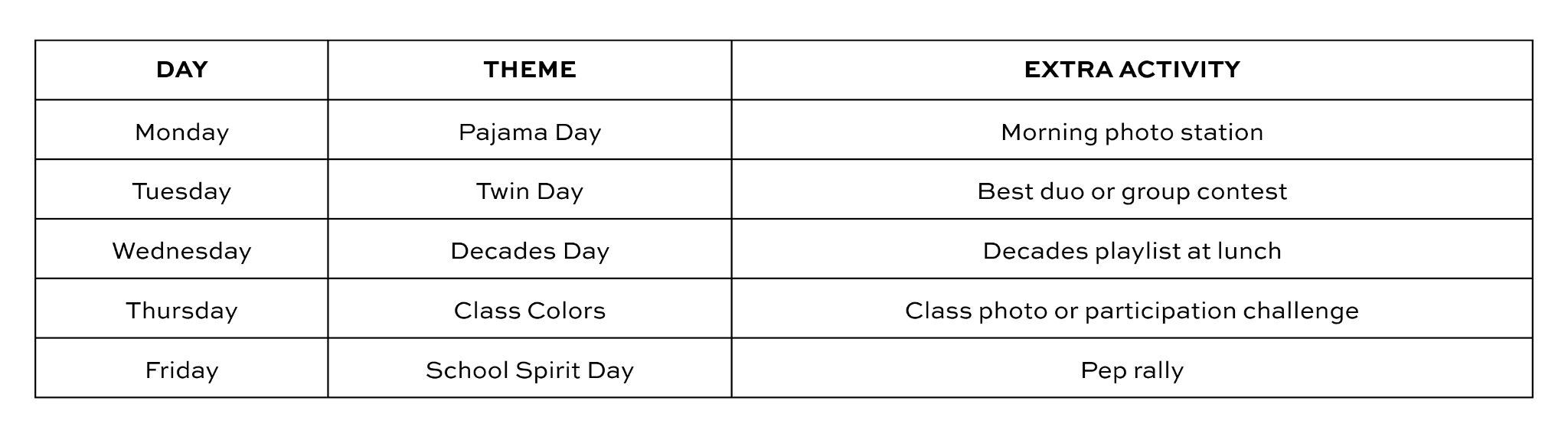
One small interactive element each day can make the week feel much bigger. A photo station, playlist, announcement, or class challenge creates a shared moment without adding a complicated production.
If your school wants a ready-made spirit activity, the Fazit School Spirit playbook can help you plan a school-color moment. The Fazit Team Spirit Station playbook is another option for creating a simple station students can visit during the week.

Step 5: Make Your Master Spirit Week Checklist
Once the themes and activities are selected, turn every idea into a task. A master spirit week checklist helps you see what needs to happen before, during, and after the event.
Include:
- Theme approval
- Activity approval
- Decorations
- Supplies
- Prizes
- Signs and posters
- Volunteer recruitment
- Morning announcements
- Social posts
- Emails or newsletters to families
- Photography permissions and coverage
- Setup
- Cleanup
- Pep rally coordination
- Day-of contacts
Break large items into smaller actions. “Plan pep rally” is too broad for one task. A more useful list might include confirming the schedule, reserving the space, identifying participants, arranging sound equipment, preparing announcements, assigning setup, and confirming cleanup.
Put these tasks into one playbook rather than managing separate notes, emails, and spreadsheets. For every task, record the owner, deadline, status, and any related details or links.

Step 6: Work Backward From Spirit Week
Six weeks gives a first-time organizer a comfortable planning window. If you have less time, keep the same order and simplify the activities instead of trying to compress an elaborate plan.
6 Weeks Before
Confirm the dates, budget, approval process, planning team, and overall scope.
5 Weeks Before
Choose the daily themes and decide whether each day will include an activity.
4 Weeks Before
Get final approval, assign responsibilities, and determine what needs to be purchased, borrowed, printed, or made.
3 Weeks Before
Order supplies and begin creating posters, announcements, family emails, and social content.
2 Weeks Before
Announce the full theme schedule to students, families, and staff. Confirm volunteers and check the status of supplies.
1 Week Before
Finalize prizes, signs, announcements, contact information, and day-of responsibilities. Organize supplies by day so the Monday materials are not buried under Friday’s pep rally items.
Spirit Week
Follow the daily plan, communicate with volunteers, handle day-of tasks, and note any adjustments for the next day.
Step 7: Tell Everyone What’s Happening
A well-planned week can still have low participation if the schedule is only announced once. Families need enough notice to plan, and students benefit from regular reminders.
Share the themes about two weeks before Spirit Week when possible. Then repeat the information through several channels:
- Morning announcements
- Parent emails or newsletters
- Posters in high-traffic areas
- School social media
- Countdown posts
- Daily reminders
- Teacher and staff reminders
Keep the wording consistent everywhere. Use the same theme names, dates, dress-code notes, and activity details on every channel. A simple one-page schedule can make communication easier for students, families, and teachers.
Repetition is useful, not excessive. A family may miss the first email, a student may not notice a poster until the third day, and staff may need a reminder before making classroom announcements.

Step 8: Create a Simple Day-of Plan
For each day, answer six questions:
- What is happening?
- What time does it happen?
- What supplies are needed?
- Who is responsible?
- Who needs to be there?
- What needs to happen afterward?
Your Monday plan, for example, might say that the photo station opens near the main entrance 20 minutes before school, one volunteer brings the backdrop, another takes photos, and both pack the materials after the first bell.
Include a day-of contact for each activity and make sure volunteers know who can answer questions. Keep the plan in Partytrick, so no one has to rely on one organizer’s memory or search through a long group chat.
Step 9: Don’t Try to Make Your First Spirit Week Perfect
Your first Spirit Week does not need five elaborate, photo-ready events. Prioritize participation, organization, and fun. A simple week that students understand and can join is more successful than an ambitious plan that overwhelms the team.
During the week, pay attention to what works. Afterward, document:
- What students loved
- What had low participation
- What ran smoothly
- What was harder than expected
- What you would repeat
- What you would change
Ask teachers, volunteers, and student leaders for brief feedback while the week is still fresh. Save those notes with the schedule, supply list, and communication materials. Next year’s organizer will begin with a useful plan instead of a blank page.
Make Your First Spirit Week Easier With Partytrick
The hardest part of organizing Spirit Week for the first time is not always finding ideas. It is identifying all the small tasks that have to happen to make those ideas work.
Partytrick gives organizers one place for:
- Themes and inspiration
- Planning timeline
- To-dos
- Supplies
- Assignments
- Event details
- Updates
Start with a Spirit Week playbook and turn your first week from a blank page into a plan. Create your free Partytrick account, then use the Fazit School Spirit playbook or Fazit Team Spirit Station playbook to organize the details in one place.

Frequently Asked Questions
How far in advance should you start planning Spirit Week?
Start about six weeks before Spirit Week when possible. This gives you time to confirm school requirements, choose themes, receive approval, recruit help, order supplies, and promote the schedule. If you have less time, choose familiar themes and limit each day to one simple activity.
Who usually plans Spirit Week at a school?
Spirit Week may be planned by a PTA or PTO committee, parent volunteers, teachers, student council, an activities coordinator, school staff, or a combination of these groups. Before making plans, confirm who can approve decisions and who manages communication with students and families.
How many themes do you need for Spirit Week?
Most schools choose one theme for each school day, which usually means five themes. A shorter three-day week can work just as well if it better fits the school calendar or planning capacity.
What should you include in a Spirit Week plan?
Include the dates, themes, daily activities, approvals, budget, supplies, volunteers, communication schedule, task owners, deadlines, day-of contacts, setup, and cleanup. Keep everything in one master plan so the team can see what is complete and what still needs attention.
How much does Spirit Week cost?
Spirit Week can cost very little if the school focuses on dress-up themes, announcements, playlists, class photos, and donated supplies. Costs increase with decorations, prizes, food, professional photography, or a large pep rally. Confirm the budget before selecting activities, and prioritize items that make participation easier.
How do you get students to participate in Spirit Week?
Choose simple, inclusive themes, announce them early, and repeat the schedule through several channels. Ask student leaders and teachers to promote the week, show examples of how to participate, and recognize involvement without making expensive costumes or perfect outfits the standard.
More articles

How to Host a Mahjong Night for Beginners
Planning your first Mahjong night does not require an elaborate theme or a full evening of instruction. Use this practical guide to choose a date, invite the right group, set up the table, serve easy food, and help beginners feel comfortable.

How to Host a Murder Mystery Dinner Party
This is a beginner-friendly guide to hosting a murder mystery dinner party at home. It covers choosing a game, assigning characters, planning an easy menu, and building an evening your guests can follow.
How to Host with Maaterra: Compostable Tableware for Gatherings That Look Good
See how Maaterra tableware works for dinners, brunches, and outdoor gatherings, then choose what you need and save 15% with Partytrick.

Sign up for expert tips, exclusive content, and the 411 on the latest parties—all straight to your inbox.
Your shortcut to stress-free hosting
Spend less time coordinating and more time actually connecting.