


.jpeg)
Teacher Meet-and-Greet Ideas That Feel Thoughtful
A thoughtful start to the school year
The first few minutes of a school year can carry more weight than we realize. For many families, Meet the Teacher Night is the first time they step into the classroom, meet the teacher, and begin recognizing the people they will see throughout the year. It is also when children start imagining what the year might feel like.
That is why the best teacher meet-and-greet ideas are not necessarily the most elaborate. A warm welcome, clear directions, and a few thoughtful opportunities to connect can do more than a room full of decorations. The goal is to help families feel comfortable, informed, and genuinely included before the first bell rings.
Whether you are planning a formal meet-the-teacher night, a classroom open house, or a smaller teacher welcome event, begin with the experience you want families to have. If people leave knowing where to go, what to expect, and how to stay connected, the event has done its job.
Start with the guest experience
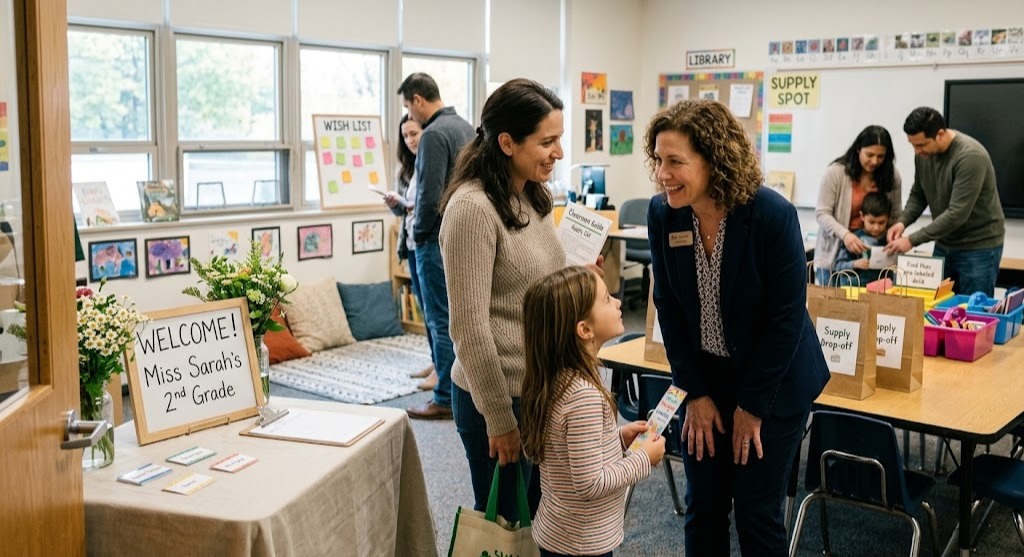
Before choosing refreshments or activities, walk through the event as if you were attending for the first time. Where would you park? Which entrance would you use? How would you find the classroom? Once inside, would you know where to stand, what to read, or what to do next?
Small moments of uncertainty can make a busy school feel overwhelming, especially for first-time families. Clear signs at the parking area, entrance, and hallway intersections immediately make the evening easier to navigate. If the school has multiple buildings or entrances, include a simple map or send parking and arrival information in advance.
Inside the classroom, create a natural flow.
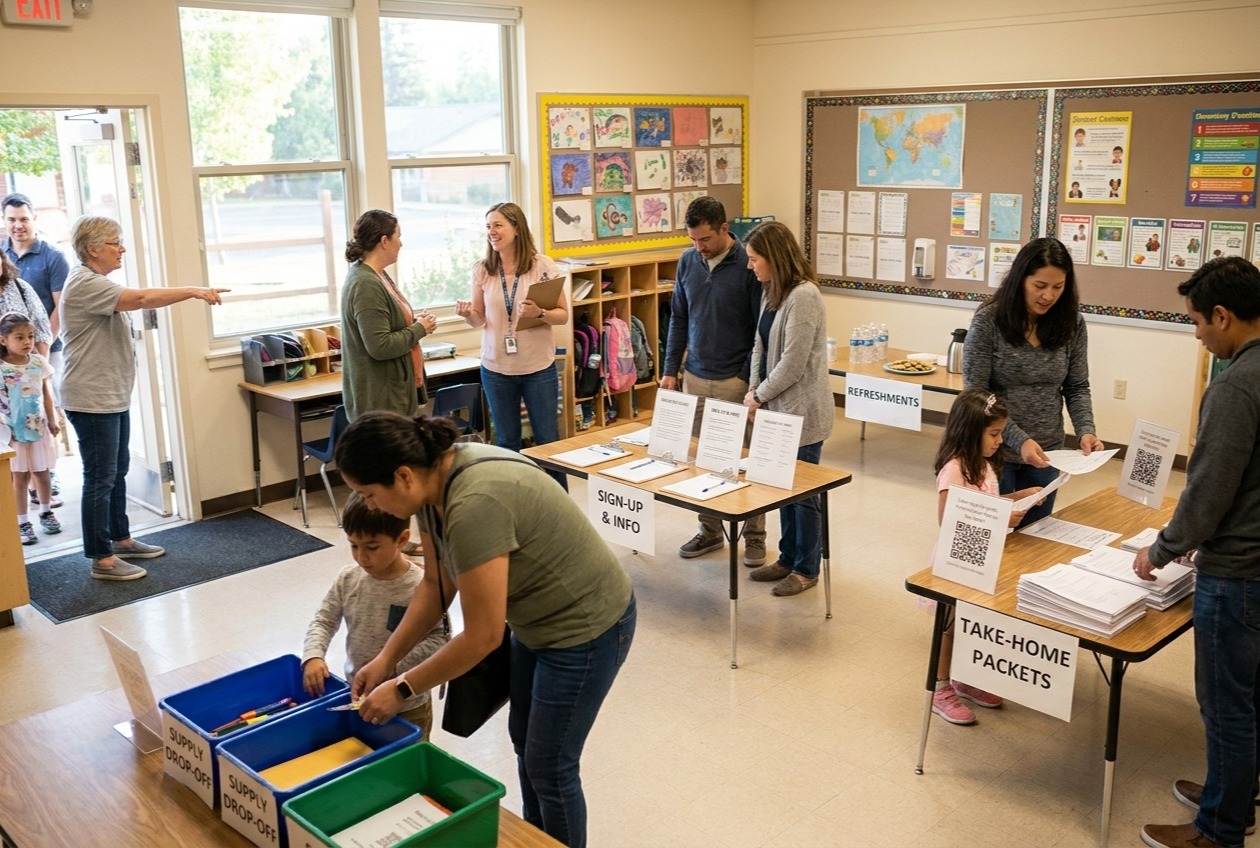
A welcome table near the entrance might hold name tags, a short note from the teacher, and a one-page overview of the evening. Supply drop-off can happen along one wall, while volunteer information and classroom resources occupy another area. Keep the center of the room open so families can move around without interrupting conversations.
A welcoming setup does not need to look staged. Desks can be labeled, student work can be displayed, and a few comfortable places to pause can make the room feel lived-in. Think about what will help a child picture themselves there and what will help a parent understand how the classroom works.
Take-home information should be useful rather than excessive. A brief classroom guide, a school calendar, contact information, and a QR code linking to the preferred communication app may be enough. Families should leave with a clear next step, not a folder they will need to sort through later.
Create opportunities for natural conversation
A classroom meet-and-greet brings together people who may not know one another yet. Some will be eager to talk, while others may need a little help finding an opening. The most effective conversation starters invite without requiring everyone to perform.
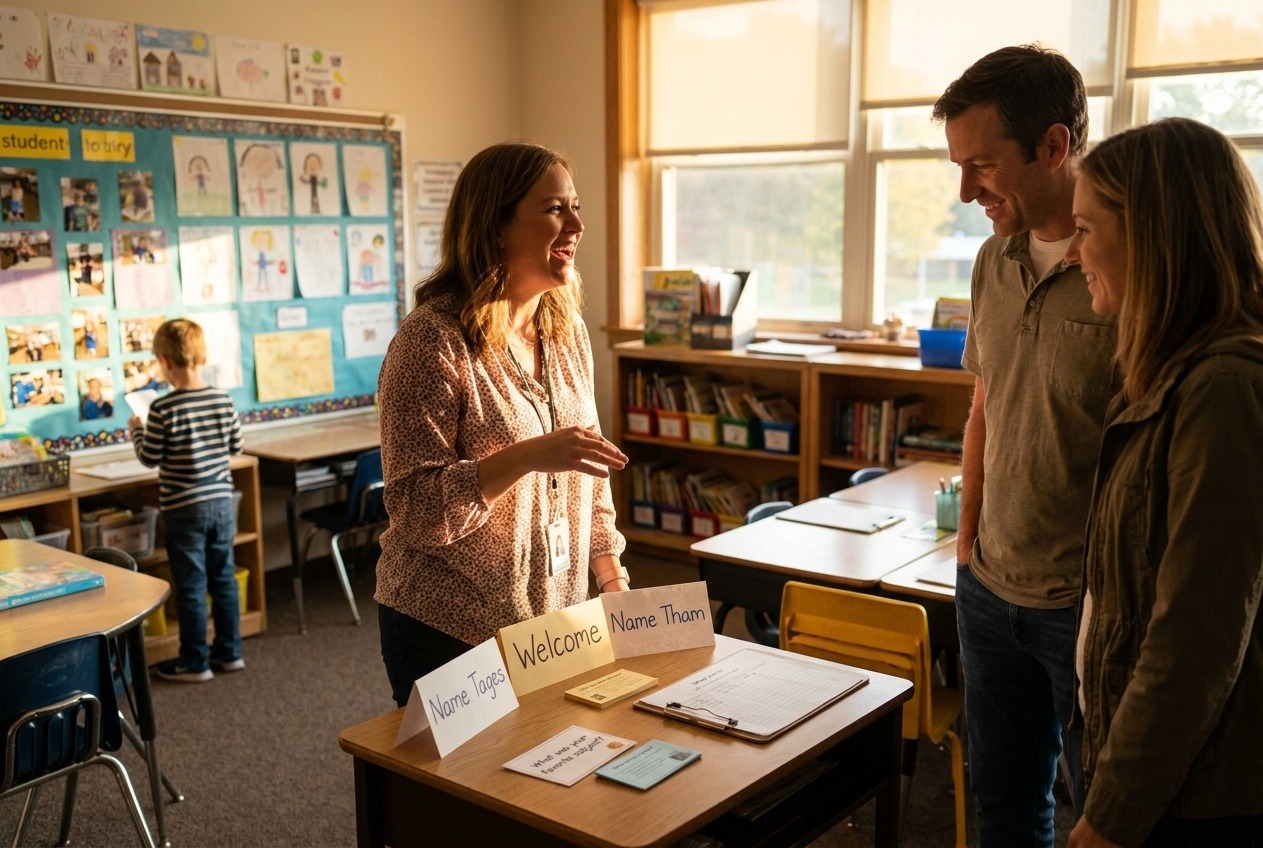
Name tags for students and adults are a simple place to begin. Consider including a brief prompt on each tag, such as a favorite book, a food they enjoy, or something they are looking forward to this year. The prompt gives people an easy question to ask and can make introductions feel less formal.
You can also place a few conversation cards around the room.
Questions such as “What helps your family settle into a new routine?” or “What is one thing your child enjoys learning about?” encourage useful, personal conversation without becoming intrusive. Keep the cards optional and place them near refreshments or seating areas where people are already likely to gather.
Small welcome stations can help divide the room into natural points of connection. A family sign-in table, a classroom goal board, or a place to write hopes for the school year gives people something to do while they wait. A shared board might ask families to add one word describing the kind of classroom community they hope to build.
If the group is small, the teacher may invite brief family introductions. Keep them voluntary and concise. A simple name, the student’s name, and one thing they are excited about is enough. In a larger school open house, it may be more comfortable to let conversations happen in smaller groups rather than asking every family to speak to the room.
The idea is to lower the barrier to conversation, not force it.
Keep refreshments simple
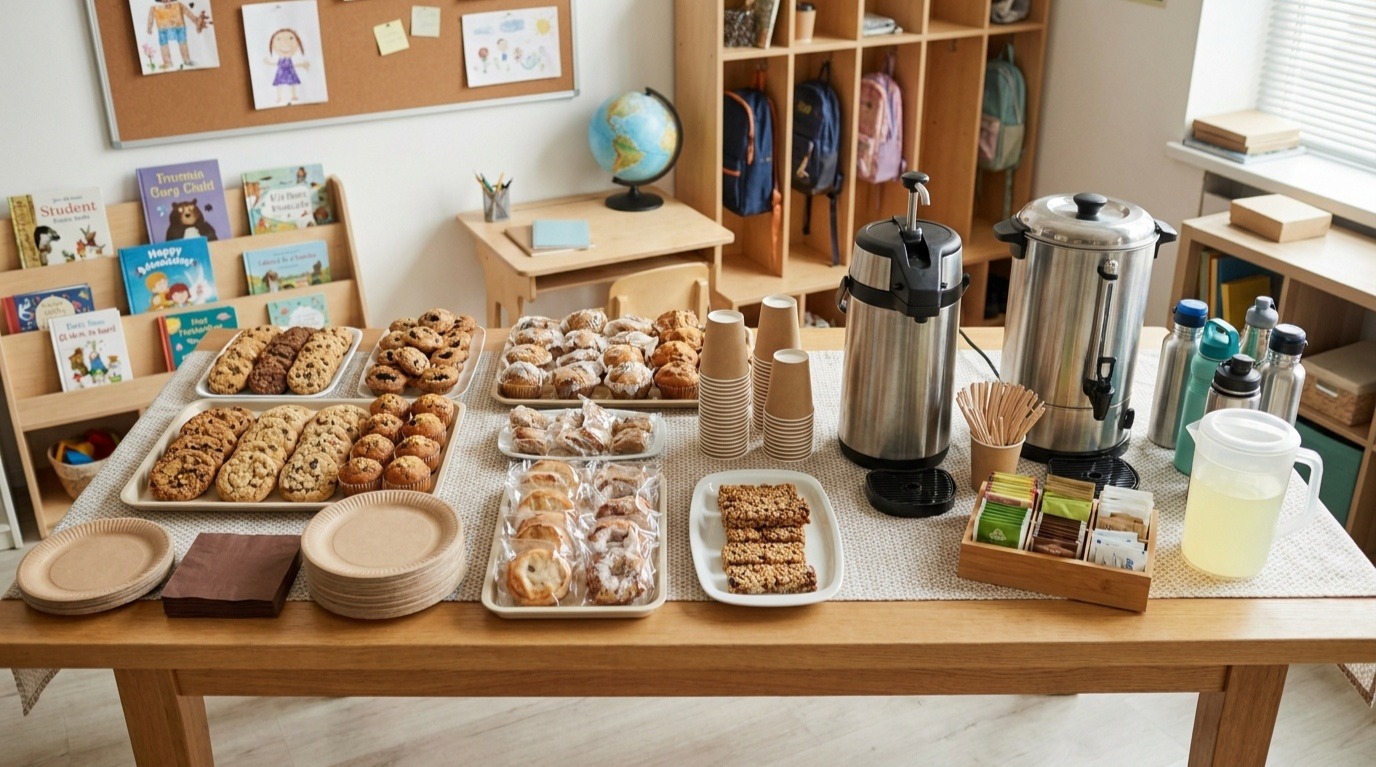
Refreshments can make a room feel hospitable, but a teacher meet-and-greet is not a dinner party. Families may be visiting several classrooms, arriving at different times, or trying to keep children moving through a busy schedule. Food should be easy to serve, easy to carry, and easy to clean up.
Coffee and tea are familiar options for an evening gathering. Lemonade, infused water, or individual bottles can offer families a simple, non-caffeinated option. For food, think about individually wrapped pastries, cookies, muffins, or other light grab-and-go snacks. If the school has allergy or food-sharing policies, follow those guidelines first and label ingredients clearly.
A small tray of brown butter chocolate chip cookies from Flutter Butter Bakery could work for a more special welcome, while a grocery-store snack or donated baked goods may be the better fit for a limited budget. Think easy, not elaborate. A few good snacks are all you need to help people feel at home.
Place drinks and snacks where they will not block the entrance or create a bottleneck. Add napkins, a wastebasket, and a clearly marked allergy-friendly option if appropriate. A simple refreshment station should support conversation, not become another activity families have to navigate.
Help families get organized
Meet the Teacher Night is also a practical opportunity to make the first weeks of school easier. Families are often trying to remember schedules, supplies, communication preferences, volunteer details, and important dates all at once. Organize the information so they can understand what matters now and what can wait.
- A supply drop-off station can keep the entrance clear and help children feel involved. Label each area clearly, especially if supplies need to be sorted into communal bins or placed at individual desks. If some items are optional or still needed, separate that information from the standard supply list.
- A volunteer sign-up can be simple. Offer a paper sheet for families who prefer it, along with a QR code to an online form. Include specific opportunities rather than a general request for help: classroom reading, event setup, library support, or occasional material preparation. Clear choices make it easier for people to contribute in ways that fit their schedules.
- A classroom wish list can be shared without pressure. Explain which items are genuinely useful and which are optional. The same principle applies to PTO information. A short introduction, a few upcoming dates, and a clear way to learn more are more useful than a long presentation.
Make communication easy to find.
Include the teacher’s preferred contact method, the school calendar, the newsletter sign-up, and any communication app instructions. A QR code can be helpful, but pair it with a short written description so families know what they are opening. You can also link to the Partytrick newsletter as a source of additional hosting and community-building ideas, if it fits the event’s audience.
Families should leave feeling more prepared, not as if they have been handed a new set of tasks.
Create small moments kids will remember
Children do not need a full-scale activity program to feel excited about their classroom. A few small moments can help them move from uncertainty to familiarity.
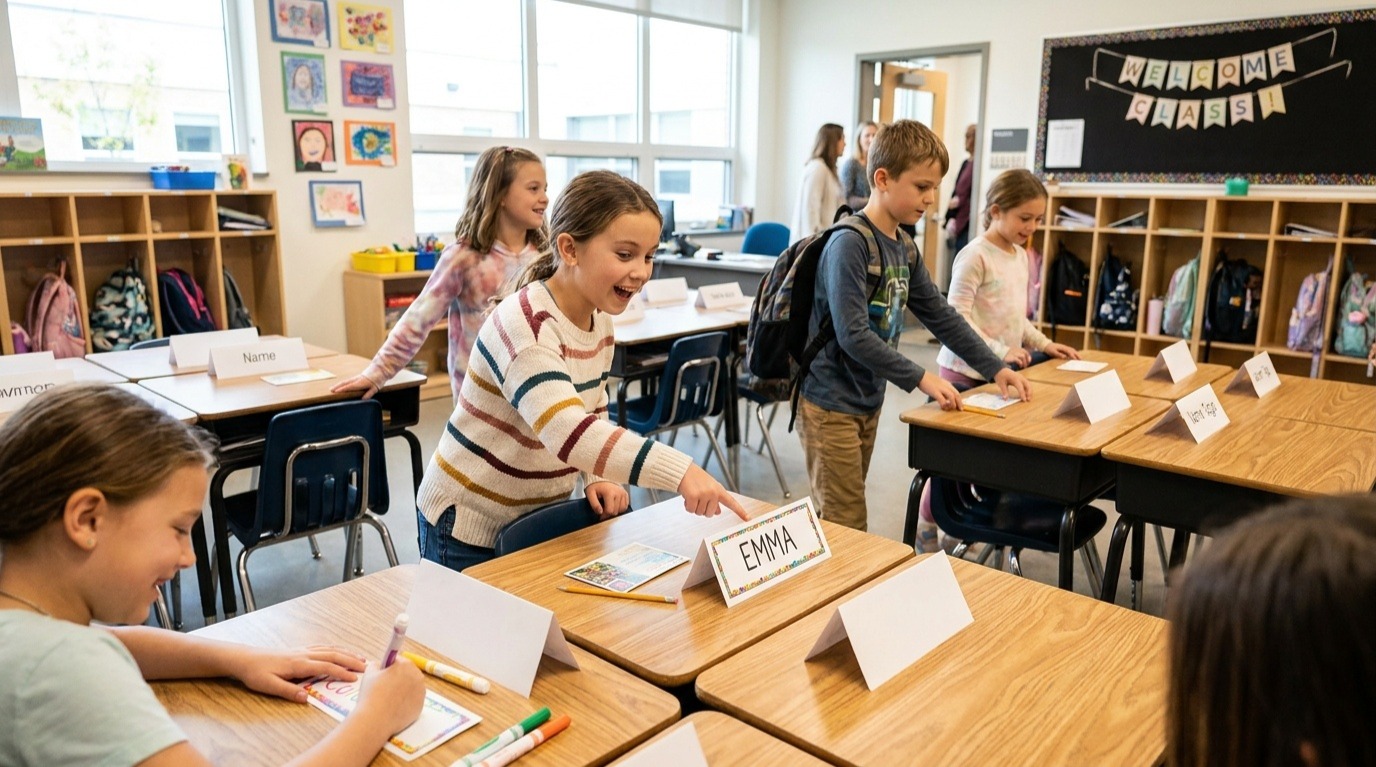
A simple classroom scavenger hunt might ask students to find the reading corner, locate the art supplies, or discover where finished work will be displayed. A “find your desk” activity gives children a chance to practice the routine before the first day. For younger students, coloring sheets, bookmarks, or a small welcome postcard from the teacher can provide a quiet activity while adults talk.
If name tags are useful for the adults, they can be helpful for students too. Classic name tags are one practical option, but handwritten labels work just as well. Let children decorate their own if there is time, or invite them to add a small drawing that says something about them.
A photo opportunity can be as simple as a classroom sign, a reading chair, or a display of student artwork. Avoid making it feel mandatory. Some children will want a picture, while others will prefer to explore the room quietly.
Children don't need elaborate crafts or an over-the-top theme. A simple activity that invites curiosity is often the most memorable.
Do not forget the parents
Parents and caregivers may be carrying their own first-day nerves.
They are learning a new teacher’s communication style, meeting other families, and trying to understand how they can support the classroom. A thoughtful event gives adults a place in the community, too.
A parent welcome table can introduce upcoming events, room parents, PTO contacts, and volunteer opportunities. If possible, have someone available to answer basic questions or direct families to the right person. This is especially helpful for families who are new to the school or joining midyear.
Make the next point of connection visible. Share the date of the first family event, explain how updates will be sent, or invite parents to join a communication channel. If there is a room parent or family liaison, offer a brief introduction rather than assuming everyone knows them.
Conversation prompts can help here, too.
A small table with family-oriented Table Topics can give adults a low-pressure way to start talking while children explore. You do not need to turn the evening into a structured networking event. A few accessible prompts are enough to help people move beyond a quick hello.
Building relationships early makes future communication easier. When families recognize one another and understand how to ask questions, small issues are less likely to become sources of confusion.
Keep the event moving
Most families are not attending only one classroom. They may be visiting siblings, meeting specialists, or trying to fit the event around work and childcare. Respecting their time is one of the most welcoming things an organizer can do.
- Avoid long presentations whenever possible. Post information that families can browse, offer a short welcome at a few set times, or provide a one-page summary they can read at their own pace. If the teacher needs to share several details, consider sending the longer version afterward so the in-person event can focus on connection.
- Leave room for one-on-one conversations. A family may have a question that does not belong in a group announcement, and the teacher should not have to choose between answering thoughtfully and keeping everyone else waiting. A second adult, such as a teaching assistant, PTO volunteer, or room parent, can help direct traffic and answer general questions.
- Clear labels make self-guided movement easier. Mark the supply drop-off, sign-up, refreshments, and take-home information areas. Families should be able to participate without waiting for instructions at every step.
A relaxed flow often feels more generous than a tightly scheduled program. Welcome people as they arrive, share the essentials, and let families move through the room in the way that works for them.
Small details that make families feel welcome
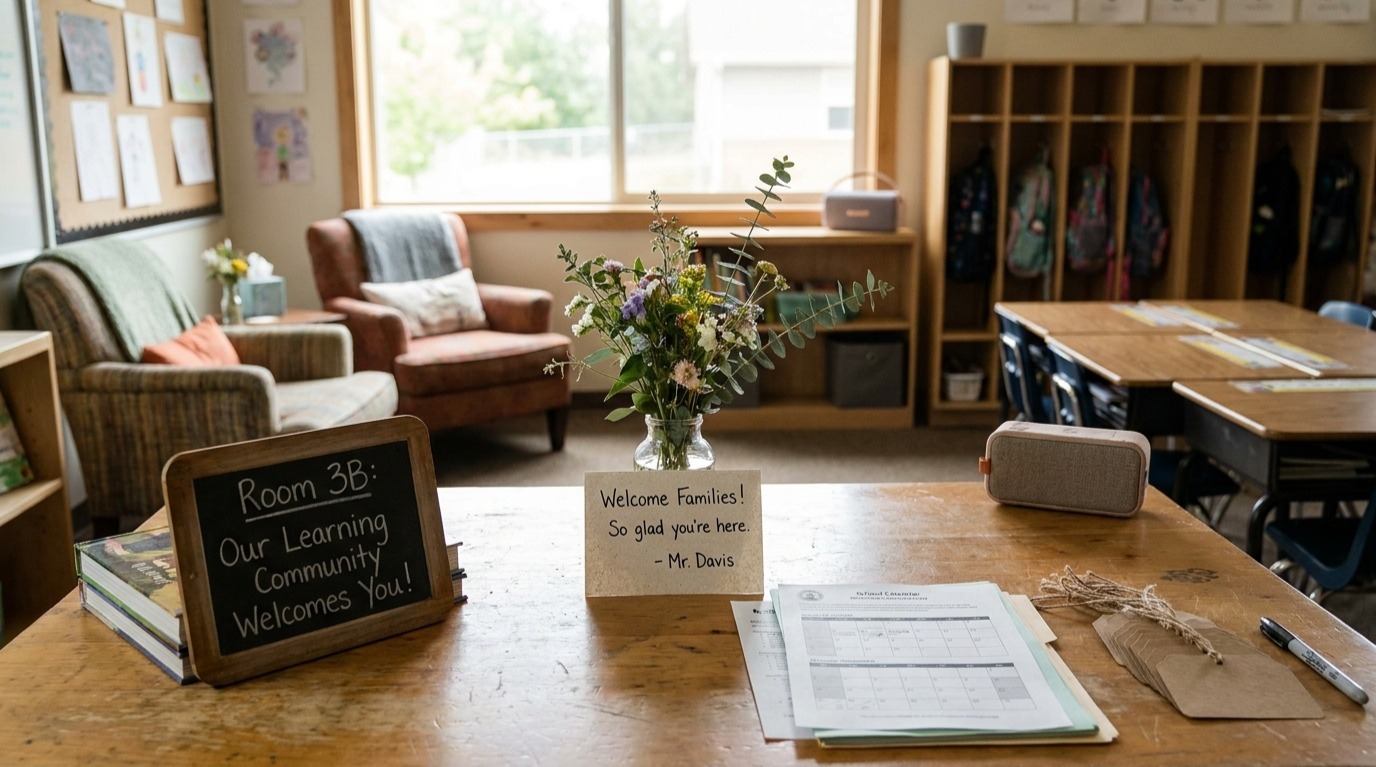
Warmth often comes from details that are easy to add and simple to remove at the end of the night. A small arrangement of fresh flowers or greenery can soften a welcome table. The Cotton Candy by UrbanStems is one example of a floral choice, but a few grocery-store stems, a classroom plant, or greenery from home can create the same sense of care.
Soft background music can make an empty room feel less stark, as long as it stays quiet enough for conversation. Clearly labeled stations reduce questions. A few comfortable chairs give grandparents, caregivers, and anyone who needs a break a place to sit. A personalized welcome sign helps children recognize that the room was prepared with them in mind.
Student artwork is especially effective because it makes the classroom feel personal without adding much cost. A handwritten welcome note from the teacher can do the same. It might say what the class will explore, what the teacher is looking forward to, or simply that every student is expected and welcome.
For more low-pressure ways to make gatherings feel personal, the ideas in Simple Entertaining Ideas You’ll Use Again and Again can translate well to a school setting. The same hospitality principles apply: make the purpose clear, remove unnecessary friction, and provide a comfortable way for people to participate.
A welcoming beginning matters more than a perfect event
Meet the Teacher Night does not need to impress families with elaborate decorations, a packed schedule, or an ambitious activity list. It needs to help parents, teachers, and students begin building trust with one another.
Start with clear directions. Make conversation easy without making it compulsory. Offer simple refreshments, organize practical information, and give children a few ways to feel at home in the room. Then leave enough space for people to move, ask questions, and connect in their own way.
When families leave feeling welcomed and informed, the school year starts on stronger footing.
If you are looking for more ways to host thoughtful gatherings, explore Partytrick’s Playbook Library, including Become a Super Neighbor, Cozy Book Club, and Parent Trap Movie Night. Each offers a different way to bring people together, start a conversation, and create a gathering that feels considered without becoming complicated.
More articles
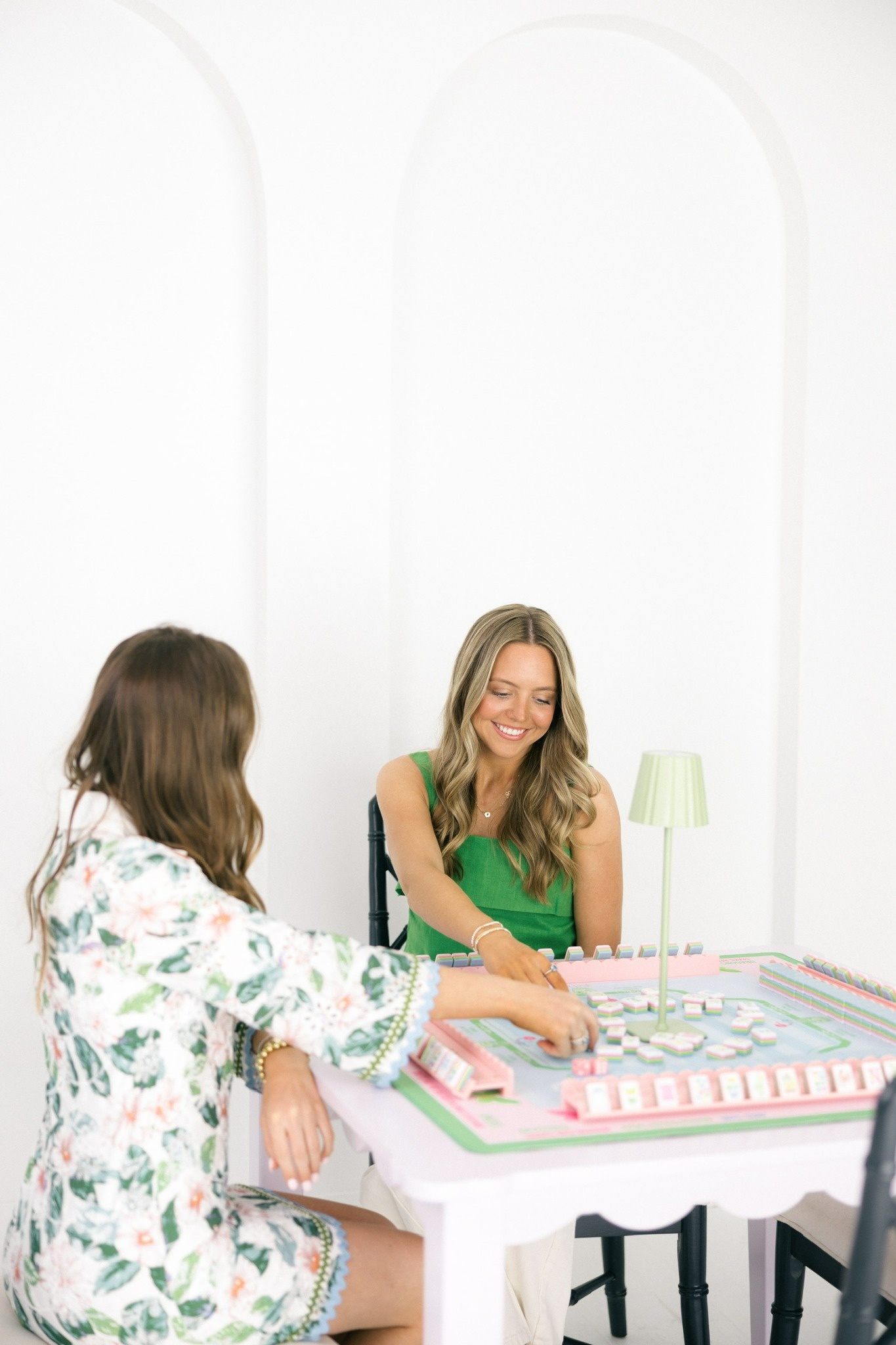
How to Host a Mahjong Night with The Daily Cheer
Plan the perfect Mahjong night with The Daily Cheer! From choosing your gathering style and setting the table to easy food ideas and hosting tips, this guide has everything you need to bring friends together for a fun game night.

Homecoming Party Ideas: What to Host Before the Game and the Dance
Practical homecoming party ideas for hosting a tailgate, predance gathering, photo hour, or casual get-together before or after the game and dance.

How to Host a Libra Birthday Party + Thoughtful Gift Ideas
Plan a Libra birthday party that feels personal with dinner, cocktail, and brunch ideas, a simple timeline, and thoughtful gifts for every interest.

Sign up for expert tips, exclusive content, and the 411 on the latest parties—all straight to your inbox.
Your shortcut to stress-free hosting
Spend less time coordinating and more time actually connecting.