


How to Plan a Party When Everyone Is Bringing Something
Everyone offered to bring something, which sounds like a dream for any host. Then the group texts start. Three people volunteer to bring tortilla chips, two others offer pasta salad, nobody claims a main dish, and you can’t remember who promised to grab a bag of ice.
Coordinating a shared meal usually starts with good intentions and ends in text thread chaos. A little structure goes a long way to fix that. Setting up a simple system from the start helps you decide what the meal actually needs, gives guests an easy way to claim contributions, and keeps your entire plan in one clear spot.
Decide What Kind of Potluck You’re Hosting
First, give the gathering a clear shape. A brunch for ten, a backyard snack table, and a seated dinner each call for a different contribution plan.
Before opening the sign-up list, settle these six decisions:
- How many adults and children are coming?
- Is this a full meal, brunch, snacks, or dessert?
- Will guests sit at a table or serve themselves?
- Is the host providing a main dish?
- Are there allergies or dietary needs to account for?
- Is there enough room to heat, chill, and serve the food?
The format affects every request that follows. A casual afternoon gathering may need snacks, drinks, and something sweet. A dinner needs more substantial coverage, including a main dish and enough sides to round it out.
If the headcount is still taking shape, use our guide to making a guest list before dividing the menu. A reasonable estimate makes it much easier to judge portions and spot gaps.
What Should You Ask Guests to Bring to a Potluck?
Break the menu into categories before collecting specific dish names. This shows what the meal needs without giving guests a long list of assignments.
Useful categories include:
- Main dishes
- Sides and salads
- Appetizers
- Desserts
- Drinks
- Nonfood essentials, such as ice, napkins, or serving utensils
The host may want to claim one dependable anchor. That could be the main dish, nonalcoholic drinks, or another item that would be difficult to replace at the last minute. Once that anchor is set, guests can choose from the remaining categories.
Avoid deciding on a fixed number of dishes until you know the headcount and approximate portions. One large casserole may cover a category that would otherwise require two smaller contributions.
For seasonal menu inspiration, Easy Fall Potluck Ideas for Feeding a Crowd offers ideas you can fit into this planning structure. You can also begin with Partytrick’s Potluck Playbook, or use the Classic Dinner Party Playbook if the meal will be more structured. Browse Partytrick Playbooks for other gathering formats that fit your group.
How to Make a Potluck Sign-Up Sheet
A useful potluck sign-up sheet answers four questions: What category is this? What does the meal need? Who claimed it? What details should the host know?
Copy this format and adjust it for your gathering:
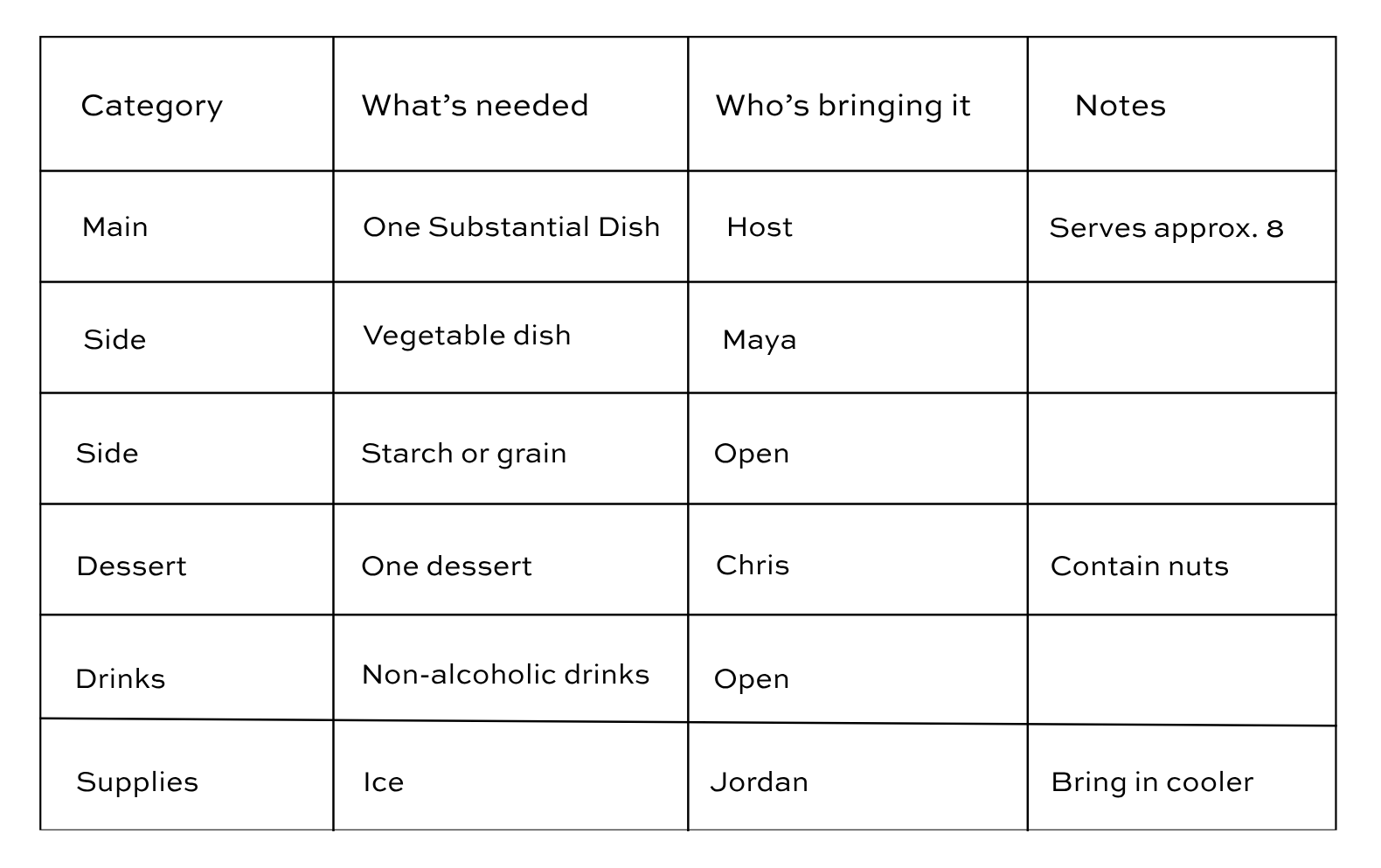
Keep open needs visible, and add helpful notes as guests respond. Notes may include:
- Approximate number of servings
- Allergens or dietary information
- Refrigeration or oven space needed
- A serving utensil that will come with the dish
- Arrival timing for food that needs setup
Once the date and menu categories are set, create the event in Partytrick and keep the contribution plan with the rest of your event details. Add the food, supplies, and responsibilities the gathering needs so the plan is easier to review in one place.
How to Avoid Duplicate Dishes
Duplicate dishes are usually a communication issue, not a guest issue. Use these steps to keep the menu balanced:
- Ask guests to claim a category before choosing a specific dish.
- Maintain one current potluck food sign-up instead of piecing together separate texts.
- Set a date for everyone to confirm what they plan to bring.
- Review the list for a main dish, vegetables, drinks, and dessert before adding more to a well-covered category.
- Give guests the option to bring supplies if cooking is not practical for them.
If two guests really want to bring pasta salad, that is fine. The goal is not to prevent any overlap. It is to avoid accidental gaps, such as a table full of sides with nothing substantial to serve alongside them.
For more guidance on dividing the meal without making guests feel managed, see Tips for Hosting a Potluck Party.
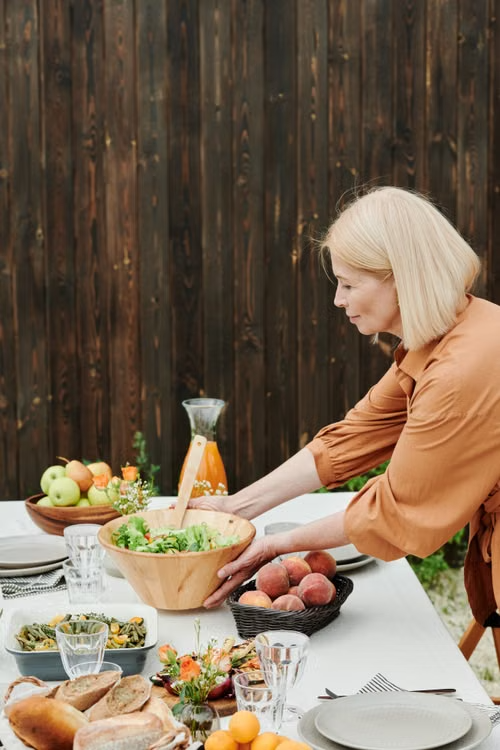
How Much Food Does Everyone Need to Bring?
There is no single portion rule that works for every potluck. Instead, look at how the contributions work together.
Consider:
- Is each guest bringing something, or is each household contributing?
- Is the dish a main, side, snack, or dessert?
- How many people are expected to eat it?
- How many other dishes will be served at the same time?
- Are children included in the headcount?
Ask each contributor to note approximately how many servings their dish makes. This does not have to be exact. A note such as serves 6 to 8 gives the host enough information to compare the menu with the guest count.
A side dish does not need to feed every guest a full portion if several sides will be available. A main dish needs closer attention, especially if it is the only substantial option for guests with specific dietary needs.
Review the full menu several days before the party. If the quantities look light, add one dependable dish or ask a guest who has not chosen an item to fill the gap.
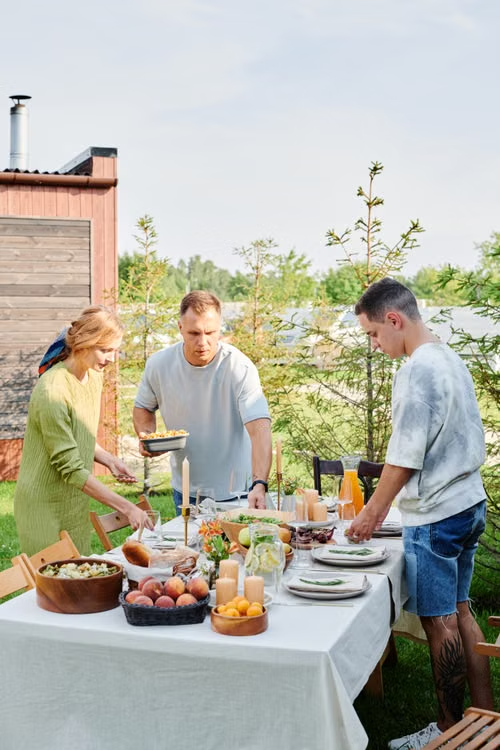
What to Say When Asking Guests to Bring Something
A clear request tells guests what the gathering is, what the host will provide, and how they can help. Keep it warm and easy to answer.
Open invitation
We’re hosting a potluck dinner on Saturday, and we’d love for everyone to contribute. We’ll provide the main dish. If you’d like to bring something, please choose a side, dessert, drink, or supply from the sign-up list and add what you have in mind. Let us know roughly how many it serves and if it contains a common allergen.
Specific request
We have the main dishes and desserts covered, but we still need a vegetable side and ice. Would you be comfortable bringing one of those? No pressure to cook. Either store-bought vegetable side or a bag of ice would be helpful.
These messages give guests a useful boundary without making the contribution feel like homework.
Don’t Forget the Serving Details
Assigning the food is only part of the plan. A dish still needs a place on the table and, in most cases, something to serve it with.
Check these details before the gathering:
- Serving spoons, tongs, and knives
- Labels for dishes and relevant allergens
- Plates, cups, napkins, and cutlery
- Ice and coolers
- Counter, refrigerator, and oven space
- Arrival time for dishes that need setup
- Containers for leftovers
Ask guests to bring a serving utensil with their dish when practical. The host should still keep a few extras nearby. Wooden Utensils with Iris Blue Enamel Handle 3-Piece Set by Coton Colors can cover salads and sides, while Dinner Plates by Our Place work well for a serve-yourself meal.
Labels help guests identify dishes and allergens without having to ask the cook each time. Superlatives Place Cards by Dear Annabelle can be repurposed as food labels. For anything left at the end of the meal, The Container Set by Modern Picnic gives the host a reusable way to pack portions.
A Simple Potluck Planning Timeline
2 to 3 weeks before
- Set the date and meal format.
- Create the event.
- Build the guest list and send invitations.
- Decide what the host will provide.
1 to 2 weeks before
- Share the contribution categories.
- Ask guests to claim an item.
- Record each contribution in the current plan.
Several days before
- Review the menu for gaps.
- Confirm approximate serving sizes and dietary information.
- Make the host’s shopping list.
- Follow up on any open categories.
The day before
- Prepare anything that can be made ahead.
- Clear refrigerator, oven, and serving space.
- Set out labels and extra utensils.
- Send arrival, parking, and entry details.
The day of
- Arrange food by course or category as it arrives.
- Add labels and serving utensils.
- Keep cold food chilled and hot food at a safe temperature.
- Pack leftovers after the meal.
- Enjoy time with your guests.
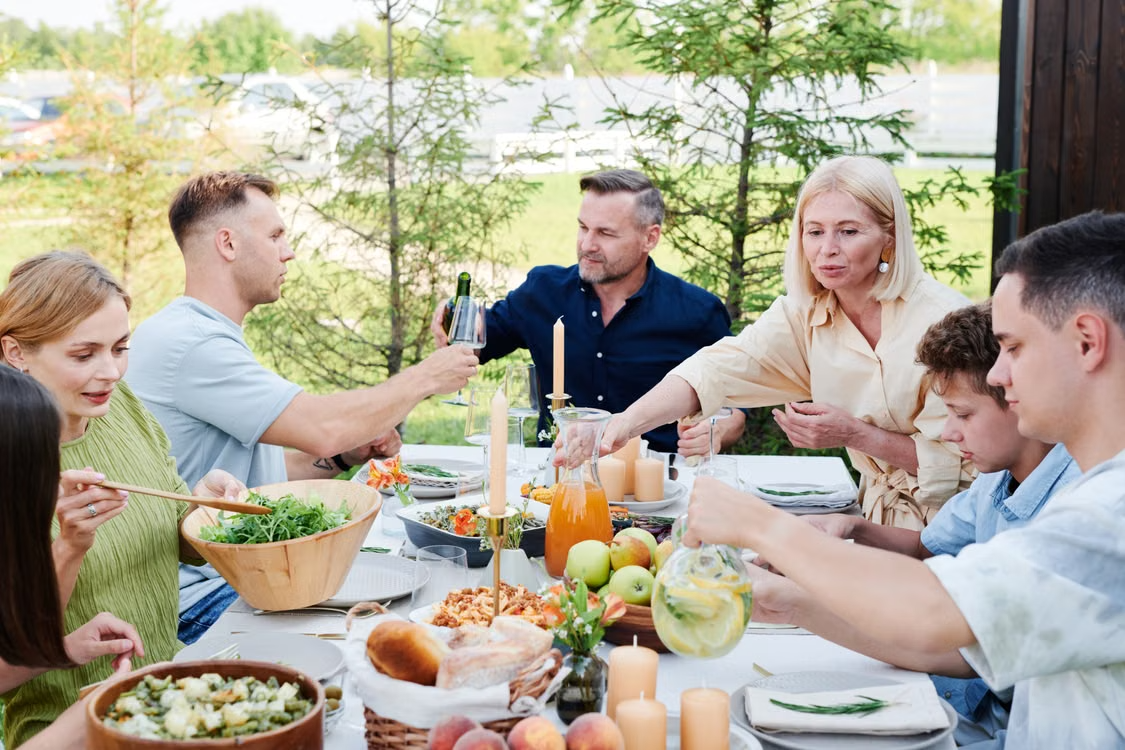
Keep Your Potluck Plan Together With Partytrick
A potluck involves more than a menu. There is a date, guest list, food, drinks, supplies, setup, and follow-up to coordinate. Partytrick gives the host a place to build the event plan and keep track of what needs to happen.
Start by creating the event. Then add the contributions and tasks required to make the meal work, including open menu categories, host purchases, serving supplies, and setup needs. Keeping these details together makes it easier to review the plan and notice what is still missing.
Create your potluck event with Partytrick.
Frequently Asked Questions
How do you organize a potluck party?
Choose the meal format and guest count first. Decide what the host will provide, divide the remaining needs into categories, and use one current sign-up list to record contributions, serving sizes, and dietary notes.
What should a host provide for a potluck?
The host should provide the space, a clear plan, and at least one reliable part of the meal or supply setup. Depending on the gathering, that may be the main dish, drinks, plates, ice, or extra serving utensils.
How do you ask guests to bring food to a party?
Explain what the host is providing, share the open categories, and let guests choose how they would like to contribute. Include a deadline for confirming the item, and make store-bought food or nonfood supplies valid options.
What should be on a potluck sign-up sheet?
Include the category, what is needed, who is bringing it, and notes. The notes can cover servings, allergens, temperature needs, and serving utensils.
How do you avoid everyone bringing the same thing?
Ask guests to claim a category before choosing a dish, and keep a single list everyone can reference. Review the menu before accepting more items in a category that already has enough coverage.
What can a guest bring if they don’t cook?
Helpful options include drinks, ice, bread, a store-bought dessert, napkins, plates, serving utensils, or containers for leftovers. A contribution does not need to be homemade to support the gathering.
A well-run potluck is not about managing every detail. It is about giving the group enough structure to contribute with confidence. Set the format, make the open needs visible, and keep the current plan in one place. Then the shared meal can feel shared for the right reasons.
More articles

Halloween Party Themes for Adults That Go Beyond Costumes
Host a Halloween night built around something your friends will enjoy doing together, with costumes optional. Explore ten adult party themes, with simple food pairings and practical tips to help you choose one that fits your group, space, and budget.

Ask Partytrick: How Do I Host a Halloween Party When Half My Friends Hate Costumes?
Planning a Halloween party when half your friends hate costumes can be simple by making costumes optional and clearly stating the dress code in the invitation. You can center the evening around an activity like a movie night, game night, or pumpkin decorating so everyone feels welcome to join in on the fun.
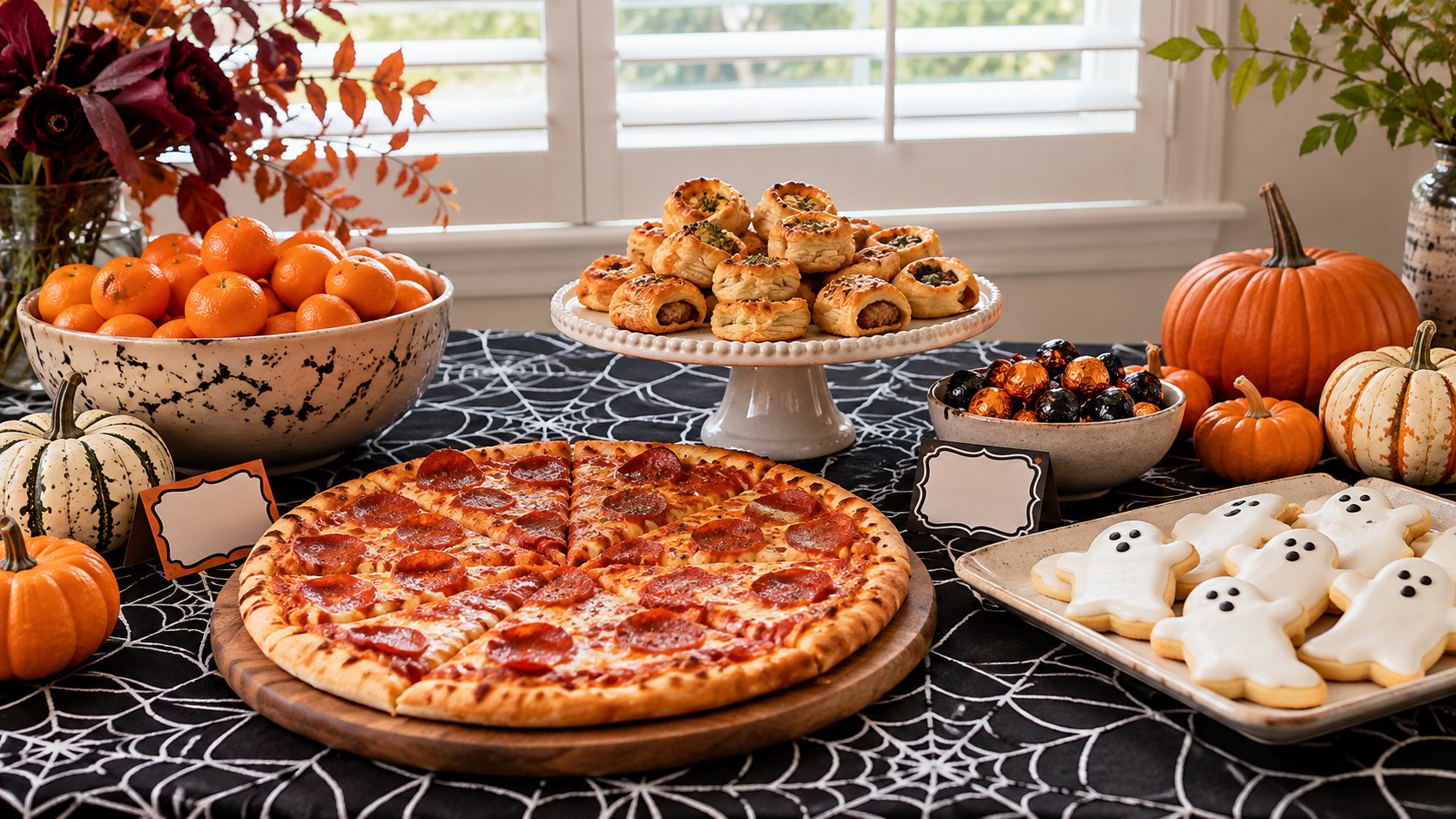
Easy Halloween Party Food for Adults: A Mostly Store-Bought Menu
Plan an easy adult Halloween party with a mostly store-bought menu, three sample menus, a practical shopping list, and simple tips for drinks, serving, and dietary needs.

Sign up for expert tips, exclusive content, and the 411 on the latest parties—all straight to your inbox.
Your shortcut to stress-free hosting
Spend less time coordinating and more time actually connecting.