



How to Organize a Teacher Appreciation Week Without Doing Everything Yourself
Teacher Appreciation Week has a way of sounding simple until you are the person responsible for making it happen.
Suddenly, a thoughtful thank-you becomes a full week of gifts, meals, decorations, student notes, classroom surprises, sign-up sheets, budget questions, and last-minute reminders. For many room parents, it can start to feel less like appreciation and more like a second job.
It can actually be much simpler than that.
A meaningful Teacher Appreciation Week does not require one person to carry the entire classroom.
It works best when the plan is clear, the responsibilities are shared, and the gestures feel sincere rather than overproduced. Teachers do not need a Pinterest-perfect production to feel valued. More often, they remember the handwritten notes, the families who noticed what they needed, the students who took the time to say thank you, and the classroom community that came together thoughtfully.
If you are organizing Teacher Appreciation Week this year, the goal is not to do everything yourself. The goal is to create a simple, warm, organized week that lets families participate in realistic ways and helps teachers feel genuinely appreciated.
Start planning earlier than you think
The easiest way to make Teacher Appreciation Week feel manageable is to begin before it feels urgent.
Planning a few weeks in advance gives you time to make thoughtful decisions instead of reacting to whatever is due tomorrow. It also gives families enough notice to participate, especially if they need to send in a note, contribute to a group gift, sign up for food, or help with classroom decorations.
- Start by confirming the exact dates of Teacher Appreciation Week with your school. Some schools follow the national calendar, while others choose their own week or add school-specific events. Before you build a plan, make sure you know what is already happening at the school level so your classroom effort complements it rather than overlaps with it.
- Next, check whether your teacher has shared any preferences. Some teachers are happy to receive classroom supplies. Others may prefer a favorite coffee order, a gift card, a quiet lunch, or handwritten notes from students. If your school allows it, a simple favorites form can help you avoid guessing. You can ask about snacks, drinks, restaurants, classroom needs, favorite colors, favorite flowers, and any allergies or dietary restrictions.
- From there, set a realistic budget. This does not need to be complicated. Decide whether you are asking families for a voluntary contribution, organizing donated items, or doing a mix of both. Keep donation requests reasonable and make it clear that participation is optional. A thoughtful week should feel accessible, not like another source of financial pressure for families.
Early planning also gives you time to recruit volunteers before everyone’s calendars are full. Instead of waiting until the week before, ask for help as soon as you have a rough plan. Even two or three reliable volunteers can make the entire week easier.
- Finally, create a simple schedule. It does not need to be elaborate. A few anchor moments, such as breakfast, a student note day, a favorite snack delivery, a classroom supply refresh, and a group gift, can create a full and thoughtful week without requiring constant surprises.
If your school year already feels busy, this is also a good time to think more broadly about community building.
Partytrick’s guide to why back-to-school is one of the best times to build community is a helpful reminder that the strongest classroom traditions usually begin with simple, consistent ways for families to connect.

Decide what kind of week you want to create
Before you start assigning tasks or collecting money, decide what kind of Teacher Appreciation Week you are actually trying to create.
It is easy to get pulled into elaborate examples online: themed days, coordinated outfits, balloon arches, custom signs, catered meals, gift baskets, and daily surprises. Those ideas can be lovely when a team has the time and budget for them. But they are not the only way to show appreciation, nor are they always the most meaningful.
A better starting point is to ask: what would feel thoughtful, achievable, and useful for this teacher?
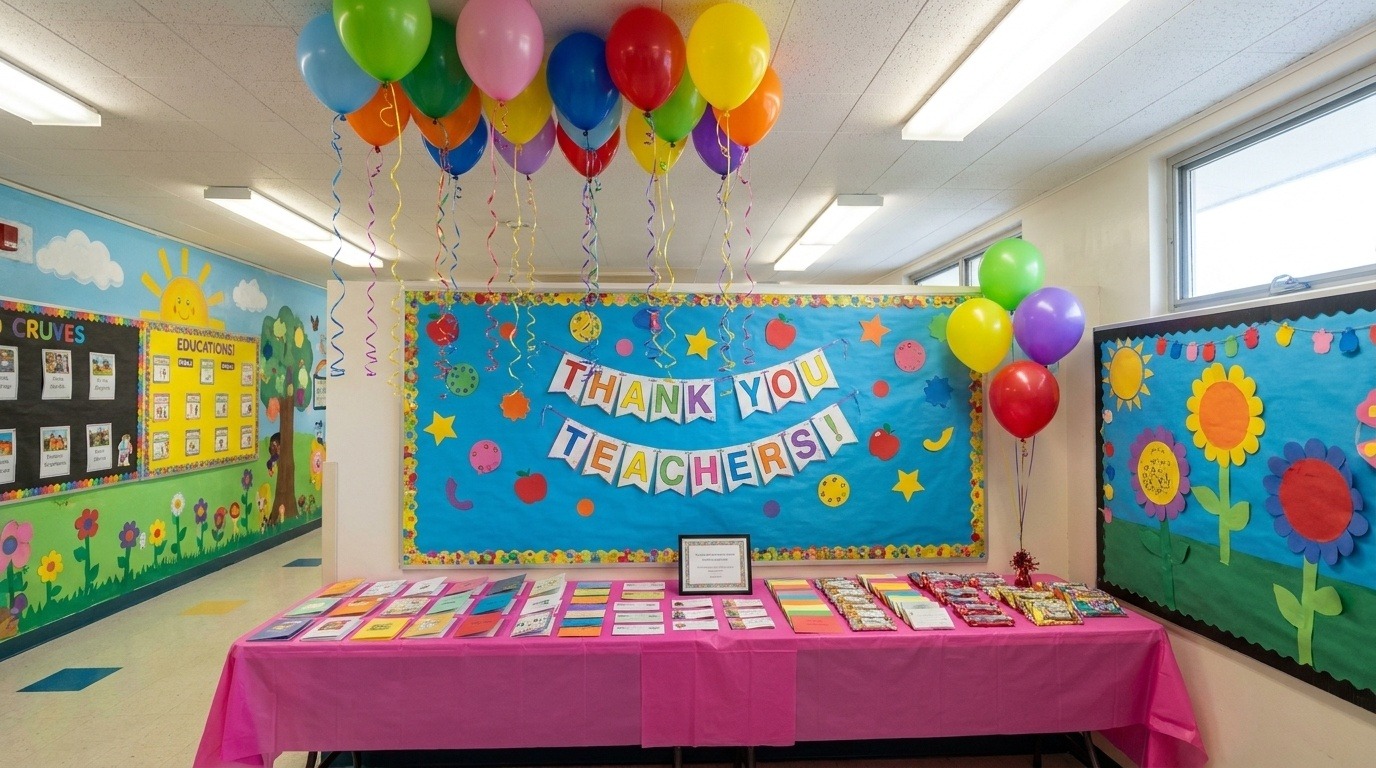
That might look like a week of small surprises: a favorite drink on Monday, handwritten notes from students on Tuesday, flowers on Wednesday, classroom supplies on Thursday, and a group gift to wrap up the week. Or you might skip the daily themes altogether and put your energy toward one meaningful class gift. You could also decorate the classroom door, organize a simple breakfast, or stock the teacher's desk with their favorite snacks.
Handwritten student notes are often one of the most meaningful teacher appreciation ideas because they are personal and low-cost. Younger students can draw pictures. Older students can write one specific thing they appreciate. Families can help by sending in cards from home or contributing to a shared class booklet.
You can also think beyond physical gifts.
A teacher might appreciate help organizing supplies, restocking classroom basics, creating a calm lunch setup, or having families cover small tasks that usually fall on the teacher. Experiences can work, too, such as a delivered lunch, a coffee run, or a quiet break supported by school-approved volunteers.
The most important thing is to choose ideas that fit your classroom community. If families are busy, keep participation simple. If budgets vary, offer non-monetary options. If your volunteer team is small, avoid a plan that requires daily setup and cleanup.
A collaborative gift exchange can also inspire the tone of the week. Partytrick’s Favorite Things Party with Poppy Gifting is built around thoughtful giving and group participation, which translates beautifully to Teacher Appreciation Week: everyone contributes one small, meaningful piece instead of one person trying to create the entire experience.
Build a volunteer team instead of doing everything yourself
This is where many room parents accidentally make Teacher Appreciation Week harder than it needs to be. They ask for help, but in a way that is too broad.
A message like, “Let me know if you can help,” is well-intentioned, but it puts the work back on the organizer. Families have to figure out what is needed, how much time it will take, whether they are qualified to help, and what the deadline is. Most busy parents will read the message, mean to respond later, and forget.
Specific requests work better.
Rather than asking the whole class for help, recruit two or three co-organizers and give each person a specific role.
One can coordinate food, another can handle decorations or classroom setup, and another can manage communication, reminders, and the collection of contributions. If you have a larger group of volunteers, divide responsibilities by day, with different families taking the lead on breakfast, notes, snacks, supplies, or the group gift.
This approach helps everyone because expectations are clear. No one has to guess what “helping” means, and no one person becomes responsible for every detail.
You might send a message like:
“I’m helping organize Teacher Appreciation Week for our class and would love two or three volunteers to take on specific pieces. We need one person to coordinate breakfast, one person to manage student notes, and one person to help collect contributions for the group gift. Each role should be simple and can be done mostly by text or email.”
That kind of request feels manageable. It gives people a defined job and a clear sense of scope.
Once you have your core team, divide the full plan into tasks. Write down everything that needs to happen, then assign each item to one person. Include deadlines, delivery times, and any school guidelines. A short shared document or sign-up sheet can prevent dozens of side conversations.
Online sign-up tools are especially helpful for food, supplies, and volunteer shifts. Instead of collecting individual replies, create a list of exactly what is needed: one fruit tray, one dozen bagels, paper plates, napkins, flowers, classroom markers, thank-you cards, gift card contributions, or a volunteer to deliver lunch. Families can choose what fits their budget and schedule.
This same principle works well for food-based appreciation.
Partytrick’s Bring Your Own Board is a helpful model because everyone brings one piece of the table. For Teacher Appreciation Week, it could be a breakfast spread, a snack station, or a teacher lunch, with each family contributing something small instead of one person managing the entire menu.
If you are organizing a room parent teacher appreciation effort, remember that your role is to guide the plan, not personally complete every task. A strong teacher appreciation committee does not need to be large. It just needs clear ownership, simple communication, and volunteers who understand exactly what they are responsible for.

Make participation easy for families
Most families want to appreciate teachers. They may not have time to attend a setup, room in the budget for a large gift, or capacity to follow a complicated plan. The easier you make participation, the more likely families are to join in.
- Offer a few different ways to contribute. Some families may want to donate money toward a group gift. Others may prefer to send in a snack, write a note, have their child make artwork, bring flowers, print signs, or help with delivery. A mix of monetary and non-monetary options keeps the week inclusive.
- Keep donation requests reasonable. Instead of suggesting a high amount, give a range or say that any amount is welcome. If you are collecting for a group gift, be transparent about how the funds will be used. For example: “We’ll use contributions for a class gift card, flowers, and a few favorite snacks from the teacher’s favorites list.”
- Give families plenty of notice. A message sent the night before a student note is due may leave parents scrambling. A message sent one or two weeks in advance gives everyone time to find a card, help a child write a message, or sign up to make a contribution.
Clear instructions also matter. If students are bringing notes, say exactly when to send them, whether they should be sealed, and whether they should include the teacher’s name. If families are contributing food, include delivery time, drop-off location, and any allergies. If you are collecting gift money, include the deadline and preferred payment method.
Non-monetary participation can be just as meaningful. A student drawing, a favorite classroom memory, a short parent note, or a shared photo can be included in a keepsake booklet. These gestures often feel more personal than purchased gifts because they reflect the relationship between the teacher and the class.
The goal is to remove friction. Families should be able to read one message, understand what is needed, and choose a contribution that works for them.

Create a schedule that does not feel overwhelming
Teacher Appreciation Week does not need to be packed from Monday morning through Friday afternoon. A thoughtful rhythm is better than a constant stream of activity.
One simple schedule might look like this:
Monday: Welcome breakfast
Start the week with coffee, fruit, pastries, or a small breakfast spread. Keep it simple and easy to set up. If several teachers share a lounge, consider coordinating with other room parents so the effort feels generous without being duplicated.
Tuesday: Student thank-you notes
Ask every student to bring a handwritten note, drawing, or favorite memory. Collect them in a folder, binder, or basket. This is one of the easiest ways to make the week feel personal.
Wednesday: Favorite snack day
Use the teacher’s favorites list to stock a small snack basket or deliver a favorite drink. This can be a low-cost, high-impact gesture, especially in the middle of a busy school week.
Thursday: Flowers or classroom supplies
Invite each student to bring one flower for a class bouquet, or ask families to contribute from a classroom wish list. Supplies may not feel glamorous, but they are often genuinely useful.
Friday: Group gift and celebration
End the week with a group gift, class card, or casual celebration. If your school allows it, this could be a simple lunch, a snack table, or a low-key classroom moment.
For a fuss-free Friday celebration, Partytrick’s Pizza Party is a helpful reminder that simple, customizable gatherings are often the easiest to enjoy. A casual teacher lunch or end-of-week classroom treat does not need to be elaborate to feel special.
You can even use music to make a setup or classroom celebration feel more festive without adding much work. The Pizza Party playlist is an easy option for a cheerful, low-effort backdrop if music is appropriate for your school setting.
The key is to avoid overloading the week. Every day does not need a theme, a delivery, and a photo-worthy display. A few thoughtful moments, spaced out clearly, usually feel more meaningful and more manageable.

Communicate clearly throughout the week
Strong communication is one of the most underrated parts of Teacher Appreciation Week planning.
When families receive too many scattered reminders, details get missed. When they receive a single, well-organized message with clear deadlines, they are much more likely to follow through.
Start with one main email or message that explains the full plan. Include the week’s schedule, volunteer assignments, contribution options, deadlines, payment details, and any items students need to bring. Keep it easy to scan.
You might organize it by day:
- Monday: Breakfast, items due by 8:00 a.m.
- Tuesday: Student notes, send to school in backpacks.
- Wednesday: Favorite snack basket, sign up by Friday.
- Thursday: Classroom supply day, wish list linked.
- Friday: Group gift, contributions due Wednesday.
If you need reminders, send them strategically. One reminder a few days before the week begins and one short reminder the day before a specific item is due is usually enough. Avoid sending multiple partial updates unless something changes.
Be clear with volunteers, too.
Confirm who is bringing what, where items should go, and when they need to arrive. If someone is coordinating food, make sure they know about allergies, serving supplies, and cleanup expectations. If someone is handling decorations, confirm what the school allows.
During the week, thank families as things come together. A quick message like, “Thank you to everyone who sent notes today. The class booklet is coming together beautifully,” helps people feel included and appreciated.
Organized communication makes volunteering less stressful. It also helps the week feel calm, which is exactly what you want when the purpose is gratitude.

Focus on appreciation, not perfection
The heart of Teacher Appreciation Week is not the schedule, the decorations, the sign-up sheet, or the size of the gift. It is the message underneath all of it: we see the work you do, and we are grateful.
Teachers are not expecting room parents to create an elaborate production. They are not grading the centerpiece, comparing gift baskets, or checking whether every day has a theme. Most teachers are balancing full classrooms, student needs, communication with families, lesson plans, and a long list of responsibilities no one sees.
A sincere note from a student can matter more than an expensive gift. A calm, organized lunch can feel better than a complicated surprise. A classroom community that participates together can be more meaningful than one person staying up late to make everything look perfect.
Let the week be warm, useful, and realistic. If something small goes wrong, it is okay. If one day is simpler than planned, it is okay. If your class chooses a group gift and handwritten notes instead of five separate events, that can still be a beautiful expression of gratitude.
Sustainability matters. The best appreciation efforts are the ones people can actually repeat without burning out. When responsibilities are shared, families are more likely to participate again, and organizers are more likely to enjoy the process.

Final thoughts
Teacher Appreciation Week is not a test of how much one room parent can accomplish.
It is an opportunity for an entire classroom community to say thank you together. With early planning, clear communication, a realistic schedule, and specific volunteer roles, the week can feel thoughtful without becoming overwhelming.
Start with what your teacher will genuinely appreciate. Choose ideas your families can realistically support. Make participation simple. Share the work. Then let the gestures be sincere rather than perfect.
When responsibility is shared, everyone gets to share in the gratitude, including the person organizing it.
For more planning timelines, celebration ideas, and hosting resources you can adapt for school events, explore the Partytrick Playbook Library and sign up for the Partytrick newsletter for more thoughtful ways to gather, celebrate, and make meaningful moments feel easier.
More articles

Last-Minute Halloween Party Checklist: One Week to Doorbell
Plan a fun Halloween party in just one week with this day-by-day checklist for invitations, food, decorations, and last-minute details to help you stay organized and enjoy the gathering.

Ask Partytrick: It’s One Week Before Halloween. Is It Too Late to Host?
It’s not too late to host a Halloween party: choose a simple format, send invitations today, and follow a one-week plan for easy food, shopping, and setup.

Halloween Party Ideas from the Pros: How to Host a Night Guests Still Talk About
Ask a professional what makes a Halloween party work, and the answer is rarely just a pumpkin.

Sign up for expert tips, exclusive content, and the 411 on the latest parties—all straight to your inbox.
Your shortcut to stress-free hosting
Spend less time coordinating and more time actually connecting.