



From RSVP to Wrap-Up: The Modern Event Planning Guide
The best events look effortless.
Guests arrive on time. Vendors know where they're supposed to be. Check-in runs smoothly. Conversations happen naturally. From the attendee's perspective, everything simply works.
What they don't see are the hundreds of decisions, moving parts, and communications that took place behind the scenes to make that experience possible.
Modern event planning has become increasingly complex. Marketing teams are expected to prove ROI. Community managers are responsible for driving engagement. Small businesses are using events to deepen customer relationships and build loyalty. In fact, 74% of consumers say that engaging with branded event experiences makes them more likely to purchase a product, putting even more pressure on teams to deliver meaningful experiences and demonstrate measurable results.
At the same time, many teams are still managing critical event details across spreadsheets, email threads, shared documents, text messages, and disconnected software.
That approach may work for a single event, but it becomes much harder when events become larger, more frequent, or more important to business growth.
Successful events don't happen because someone remembers every detail. They happen because teams build systems that make planning easier, communication clearer, and execution more predictable.
This guide walks through the modern event planning process—from defining your goals to measuring success after the event ends.
Great Events Start Long Before Anyone RSVPs
Most event planning doesn't begin with a venue tour or an invitation.
Someone on the team decides to bring people together—whether to build community, strengthen customer relationships, launch a product, generate leads, or create a memorable brand experience.
Yet one of the biggest mistakes event teams make is jumping straight into logistics. The venue gets booked. Invitations get designed. Vendors get contacted. Calendars start filling up.
Before any of that happens, there should be clarity around a much more important question:
What is this event meant to accomplish?
The answer shapes everything that follows.
A networking event designed to build relationships should feel very different from a customer appreciation event. A product launch requires a different experience than a community workshop. Even if two events have the same number of attendees, success may be measured in completely different ways.
The most successful event teams don't start by planning the event itself. They start by defining the outcome they want to create.
Once that becomes clear, every other decision—from the venue and guest list to the programming and communication strategy—becomes much easier to make.
Event Planning Is Really Project Management
People often think event planning is primarily creative work. In reality, it's project management.
Every event involves timelines, budgets, vendors, stakeholders, communications, registrations, and dozens of interconnected tasks that need to remain aligned.
The challenge is that many teams manage these moving pieces in separate places. Registration lives in one spreadsheet. Vendor information is stored in another. Notes are buried in email threads. Timelines live in project management software that only part of the team can access.
At first, this may feel manageable.
As events grow larger or organizations begin hosting them more frequently, the cracks start to show. Information gets duplicated. Details get lost. Teams spend more time searching for information than acting on it.
This is where centralized event management becomes valuable.
Rather than managing event planning across disconnected tools, modern teams are increasingly looking for ways to bring attendee management, communications, timelines, vendors, and event logistics into a single workflow.
Platforms like Partytrick help teams centralize these moving pieces, making it easier to stay organized from planning through execution.
The most successful event planners aren't necessarily more organized than everyone else. They simply have better systems.

Every Planning Decision Flows From Your Budget
Once goals are established and the planning process is defined, the next step is determining how resources will be allocated.
Many people think budgeting is about controlling costs.
In reality, budgeting is about prioritization. Every event has limited resources. The question isn't how much money you can spend. It's where spending will create the greatest impact.
For one event, that might mean investing in a memorable venue. For another, it might mean prioritizing speakers, entertainment, food and beverage, content creation, or attendee experience.
Strong event budgets account for obvious expenses like venues, rentals, marketing, staffing, and technology. They also leave room for the unexpected.
Weather changes, delivery fees, last-minute rentals, and vendor adjustments are all common realities of event planning. Experienced planners understand that budgets are living documents. They evolve as planning progresses and new information becomes available.
Think of your budget less as a spending cap and more as a roadmap. It helps guide decisions, prioritize resources, and keep the event aligned with its goals.

The Right Venue Solves Problems Before They Exist
Venue selection is often treated as a creative decision. In reality, though, it's an operational one.
A great venue doesn't just provide a backdrop for your event. It removes friction from nearly every part of the attendee experience.
The wrong venue creates problems that no amount of planning can fully solve.
Maybe registration becomes congested because the entrance is too small. Maybe networking feels awkward because guests are scattered across multiple rooms. Maybe presentations suffer because the AV setup wasn't designed for your format. Maybe attendance drops because parking is limited or the location isn't convenient.
Experienced event teams evaluate venues differently. Instead of asking, "Does this space look impressive?" they ask, "Will this space make the event easier to execute?"
The answer often comes down to logistics.
- How will guests move through the space?
- Where will registration happen?
- Can vendors load in efficiently?
- Is there enough room for networking, programming, and transitions between activities?
- Will attendees feel comfortable spending several hours here?
Pro tip: Don't choose a venue because it looks good in photos. Choose it because it helps create the experience you want for people.
The most successful venues support the event's goals without drawing attention to themselves. When the space works, attendees focus on the experience. When it doesn't, everyone notices.
A networking event may thrive in an open, flexible environment that encourages conversation. A workshop may require fewer distractions and a learning-friendly layout. A customer event may benefit from a venue that reinforces the brand experience itself.
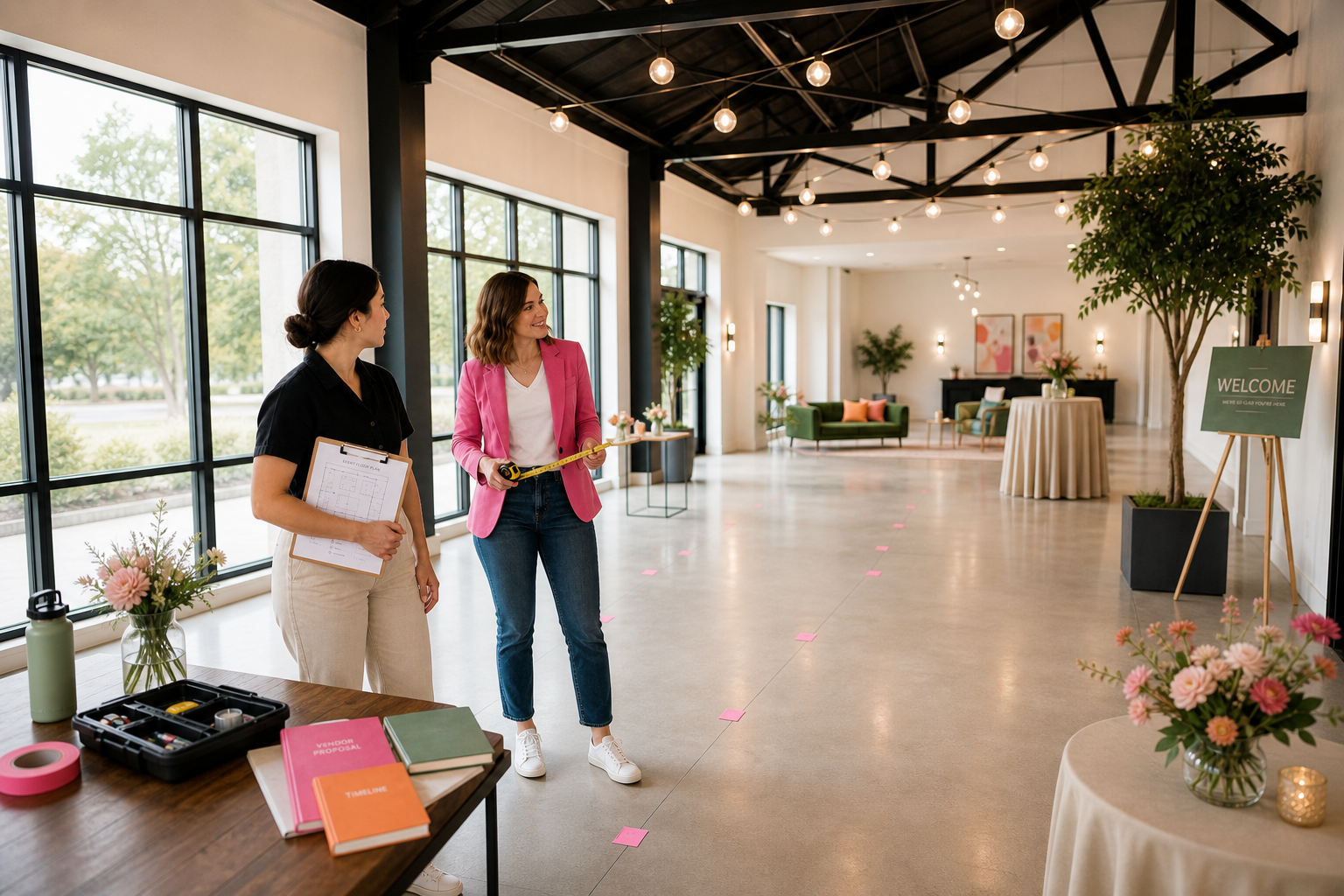
When the Details Start Piling Up
This is usually the point where event planning starts to feel real. Up until now, you've been making big-picture decisions. Choosing a date. Setting a budget. Finding a venue.
Then the details start rolling in.
The caterer has a question. The photographer needs a timeline. The rental company wants a final headcount. The venue needs load-in information. Someone needs to coordinate signage. Someone else is handling check-in.
None of these things is particularly difficult on its own. The challenge is that they all happen at the same time.
Before long, important information is scattered across email threads, text messages, spreadsheets, shared documents, and whatever notebook happened to be nearby during a meeting. That's when things start slipping through the cracks.
The most organized event teams don't necessarily have fewer moving pieces. They just have a better way of keeping everything in one place.
Instead of digging through inboxes looking for vendor contact information or searching multiple documents for the latest timeline, they centralize the details so everyone knows where to find what they need.
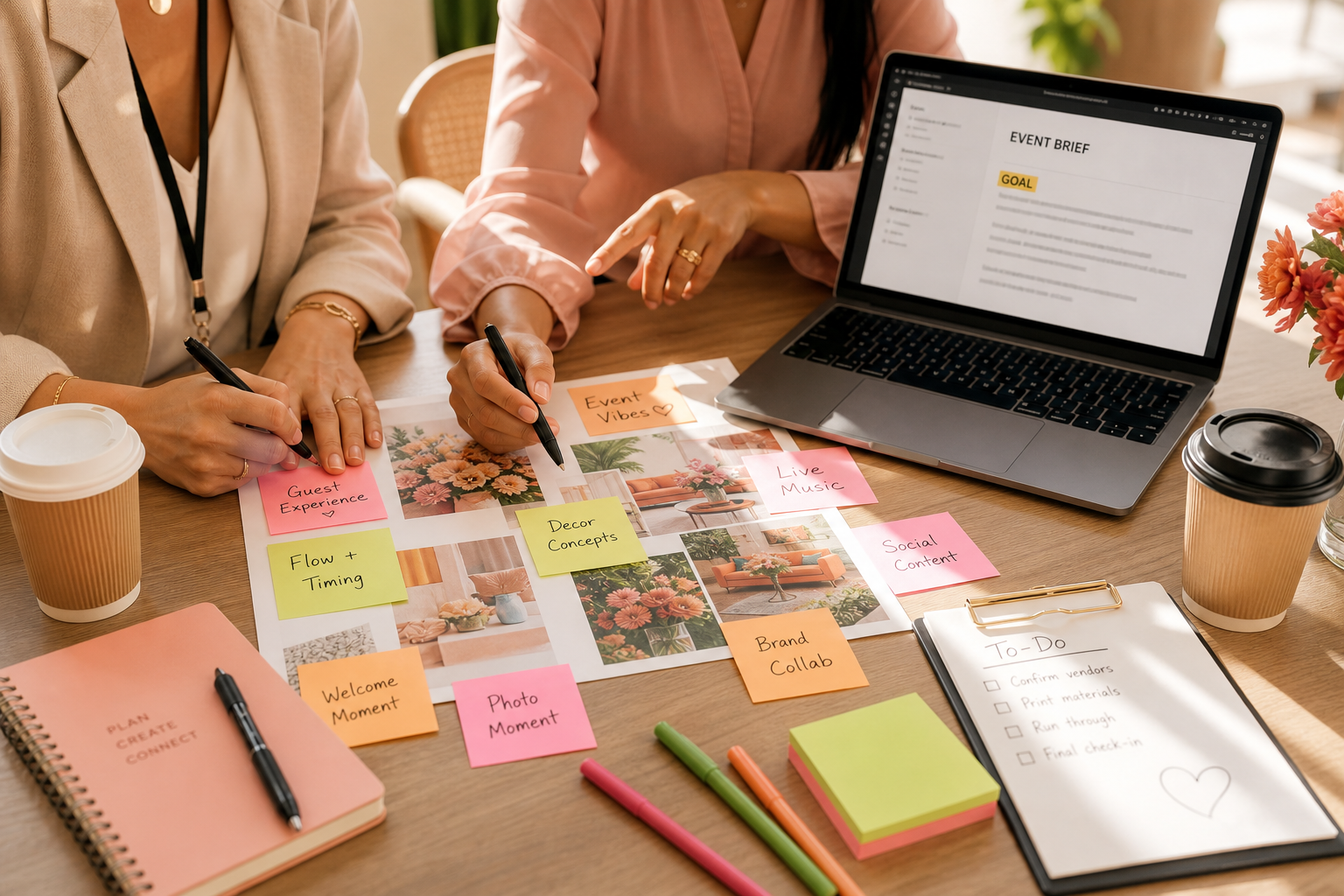
There Comes a Point When the Spreadsheet Stops Working
Let's be honest: most events start in a spreadsheet. For a while, that's perfectly fine.
You have a guest list. A few vendor contacts. Maybe a rough timeline. Everything fits neatly into a handful of tabs. Then the event grows. More attendees register. Vendors need updates. Timelines change. Team members start asking questions. Reminder emails need to go out. Last-minute changes start rolling in.
Suddenly, the spreadsheet that once felt organized starts feeling like a full-time job.
The issue isn't that spreadsheets are bad. It's that they weren't designed to manage an entire event. When attendee information lives in one place, vendor details live somewhere else, and important conversations are buried in inboxes, planning becomes harder than it needs to be.
That's why more event teams are moving away from piecing together multiple tools and documents and toward platforms built specifically for managing events.
Partytrick brings registrations, attendee information, vendor details, timelines, communications, and planning notes together in one place, so your team can spend less time tracking down information and more time focusing on the event itself.
Because once you're juggling dozens—or hundreds—of attendees, a spreadsheet shouldn't be the thing holding your event together.
Your RSVP List Is Really Your Guest Experience
Most people think RSVP management is about tracking who's coming. That's part of it.
Once registrations start rolling in, you quickly realize you're managing much more than a guest list. Someone wants to bring a plus-one. Another attendee has a dietary restriction. A VIP needs special accommodations. A few people register and never open another email. Someone joins the waitlist and wants to know their chances of getting in.
Before long, you're not just collecting names—you're managing relationships, and every interaction shapes how attendees feel about the event before they ever walk through the door.
The best event experiences start long before check-in. They start with an easy-to-navigate registration process. Clear communication. Helpful reminders. Timely updates. And a system that helps attendees feel informed rather than confused.
That's why modern RSVP management is about much more than attendance tracking.
It's about creating a smooth experience from the moment someone registers until long after the event ends.
Partytrick helps teams manage registrations, attendee information, communications, waitlists, and event updates in one place—making it easier to deliver a polished experience without creating more work behind the scenes. When attendees feel cared for before the event starts, they're much more likely to enjoy everything that comes afterward.

The Event Starts Before Event Day
One of the biggest misconceptions about events is that the experience begins when guests arrive.
In reality, it starts the moment someone registers.
From that point forward, every interaction helps shape expectations. Attendees are deciding whether they're excited to attend, whether the event feels worth their time, and whether they're confident they made the right decision by signing up.
That's why the most successful event teams don't think of promotion as a one-time announcement. They think of it as part of the attendee experience.
Every communication shapes how attendees feel about the event.
The confirmation email reassures people that they made the right decision to register. Event updates give them something to look forward to. Reminders help keep the event from getting lost among everything else competing for their attention.
The goal isn't to constantly be in someone's inbox. It's to provide useful information at the right moments so attendees feel prepared, informed, and excited to show up. Speaker announcements, agenda updates, venue details, FAQs, behind-the-scenes content, and event reminders all help maintain momentum while reducing uncertainty.
Consistent communication helps keep your event top of mind and significantly increases the likelihood that registered attendees actually show up.
Event Day Should Feel Calm—Not Chaotic
When event day arrives, most of the important decisions should already be behind you. The menu is finalized, vendors know where they need to be, the schedule is locked in, and everyone involved understands their role.
If you're constantly putting out fires, the problem usually isn't what's happening in the moment—it's something that wasn't addressed earlier in the planning process.
The best event teams aren't running around solving preventable problems. They're focused on the experience itself. They're welcoming guests, checking in with vendors, making small adjustments as needed, and paying attention to the details that help the event feel seamless.
That's where a strong run-of-show comes in.
Think of it as the roadmap for the day. It answers the questions that inevitably come up: Who's arriving when? What's happening next? Who's responsible for what?
When everyone is working from the same plan, things tend to run a lot more smoothly.
That's one of the reasons teams use Partytrick. Instead of digging through email threads, spreadsheets, and text messages to track down information, everything lives in one place. Event day should be spent hosting the event—not hunting for answers.

The Event Isn't Over When Everyone Goes Home
A lot of teams treat events as one-and-done experiences. The event happens. The photos get posted. The thank-you email goes out. Then everyone moves on to planning the next thing.
That's a missed opportunity. Some of the most valuable work happens after the event is over.
Every event generates data. The question is whether you're using it.
Which marketing channels drove the most registrations? How many people who RSVP'd actually attended? Which sessions, speakers, or activities generated the most engagement? Where did attendees drop off? What feedback came up repeatedly?
The answers can tell you a lot about what's working and what isn't. The most successful event teams aren't necessarily the ones hosting the biggest events. They're the ones learning from every event they host.
Instead of starting from scratch each time, they're building on what they've already learned. They're refining their marketing, improving the attendee experience, allocating budgets more effectively, and making smarter decisions because they have real data to guide them.
That's what turns events from isolated moments into a long-term growth strategy.
Of course, post-event communication still matters. Thank-you emails, surveys, photo galleries, recap content, and follow-up resources help extend the experience and keep the conversation going.
The real value comes from what happens next. The insights you gather should shape your next event, your next campaign, and your next decision. That's one of the reasons teams use Partytrick. Instead of losing valuable information once an event ends, attendee data, engagement insights, registration trends, and event history stay connected in one place.
The Future of Event Planning Is Simplicity
Everything we've discussed points toward a larger shift happening across the events industry: events aren't getting simpler.
Attendee expectations are rising. Marketing teams are being asked to prove impact. Community-building has become a business strategy. Organizations are hosting more events than ever before.
What is changing is how successful teams manage that complexity, and the future of event planning isn't about adding more tools.
It's about reducing friction.
The most effective teams are consolidating workflows, centralizing information, and creating repeatable systems that allow them to execute consistently without increasing administrative burden.
When planning becomes simpler, teams can spend more time focusing on what actually matters: creating experiences people want to attend.

From One Great Event to a Repeatable Event Program
Great events aren't built through heroic last-minute efforts.
They're built through clear goals, thoughtful planning, strong communication, and systems that keep everything organized from beginning to end.
Whether you're hosting a networking event, customer gathering, wellness workshop, community activation, or brand experience, success depends on more than creativity alone. It depends on having a process that allows your team to execute with confidence.
From RSVP to wrap-up, every stage of the event journey presents an opportunity to enhance the attendee experience and streamline planning.
Event planning isn't getting any simpler, but the tools used to manage it should be.
That's why more organizations are moving away from disconnected spreadsheets and fragmented workflows in favor of centralized event management platforms like Partytrick.
By bringing registrations, attendee communication, vendor coordination, timelines, and event workflows into one place, teams can spend less time managing logistics and more time creating experiences people actually want to attend.
The goal isn't simply to plan an event; it's to build an event program that can grow alongside your organization.
Book a demo to see Partytrick in action.
More articles

Ask Partytrick: How Do I Host a Halloween Party When Half My Friends Hate Costumes?
Planning a Halloween party when half your friends hate costumes can be simple by making costumes optional and clearly stating the dress code in the invitation. You can center the evening around an activity like a movie night, game night, or pumpkin decorating so everyone feels welcome to join in on the fun.

Easy Halloween Party Food for Adults: A Mostly Store-Bought Menu
Plan an easy adult Halloween party with a mostly store-bought menu, three sample menus, a practical shopping list, and simple tips for drinks, serving, and dietary needs.

Halloween Movie Night Snacks and an Easy Popcorn Bar
Looking to make movie night feel a little more Halloween? Try spooky snacks, a few sweet treats, and a DIY popcorn bar that’s easy to set up.

Sign up for expert tips, exclusive content, and the 411 on the latest parties—all straight to your inbox.
Your shortcut to stress-free hosting
Spend less time coordinating and more time actually connecting.