



Friendsgiving Menu Ideas: What to Cook, What to Ask Guests to Bring, and What to Pour
Your Friendsgiving date is set, and the group chat is already filling up with “I’ll bring wine!” That’s a nice start, but it doesn’t answer the big question: who’s making the main?
A good Friendsgiving menu doesn’t need to be elaborate. Choose one main you’re comfortable making, add a few sides that fit around it, and ask guests to bring from categories instead of naming exact dishes. Then pick one drink to serve, with a nonalcoholic option to go with it.
Here’s a simple way to make those decisions, plus three menus you can adapt to your guest list.
How Partytrick Helps
Menu planning gets easier when the date, guest list and food plan live in one place. Partytrick gives you a starting point for organizing your gathering, so you don’t have to build the plan from scratch.
Start planning with a free Partytrick account.
Start with the Main
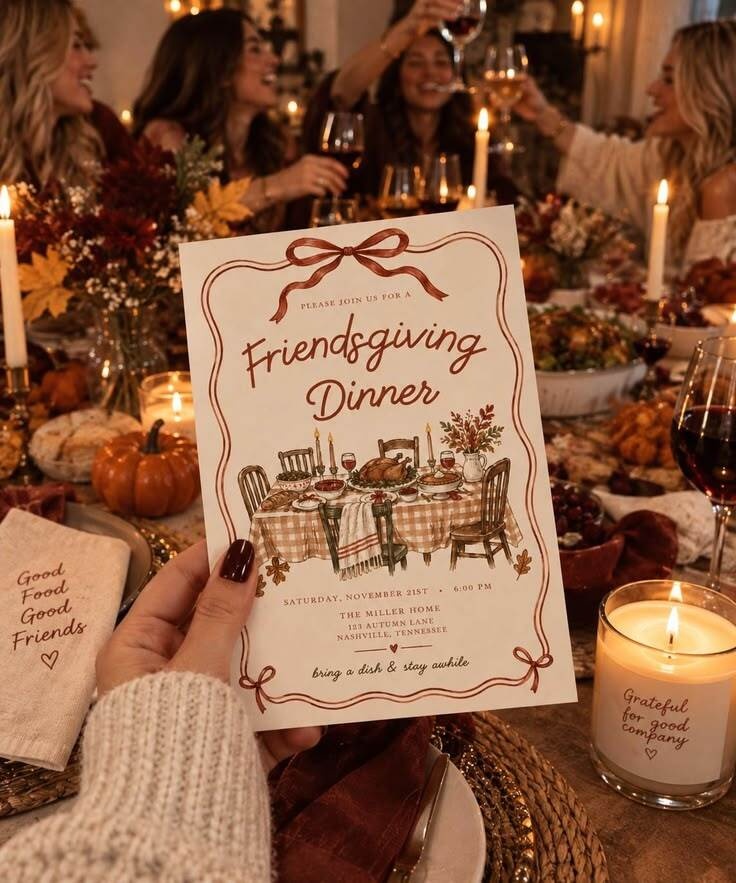
For most Friendsgiving gatherings, it helps if the host takes the lead on the main. You can choose something that fits your oven, your guest count, and how much time you want to spend cooking. Once you’ve made that decision, it’s easier to figure out how many sides to ask for and what else belongs on the table.
If you enjoy a traditional roast, make that your centerpiece. If you’d rather spend less time tending the oven, a braise can be prepared ahead and warm it before dinner. For a smaller group, roast chicken or a vegetarian main may feel more fitting than cooking a large turkey.
Think about whether anyone will need a main dish that isn’t meat. A lentil bake, mushroom tart, or stuffed squash can be substantial enough to serve as dinner, not just another side. Choosing that early gives everyone a clearer picture of the menu.
What to Ask Guests to Bring
The easiest way to coordinate a potluck is to offer categories rather than assign specific recipes. Guests can choose what they’re comfortable bringing, and you can keep the menu balanced. It also helps prevent a table with three desserts and no vegetables.
Appetizers give people something to share while everyone arrives. Ask one guest to bring a dip, cheese, or another small bite that doesn’t need oven space.
Sides fill in the meal around your main. Ask a couple of people to choose between a vegetable, salad, bread, or a grain dish. You can let them know what you’re already making so the choices don’t overlap.
Dessert is easy to delegate because it can be served after the meal without much coordination. Invite someone to bring a pie, cookies or a fruit dessert, and keep coffee or tea on hand if you’d like.
Drinks are useful to have covered, but it helps to be specific. If you’re making a signature drink, ask a friend to bring wine, beer, or sparkling water instead of another cocktail.
A warm message can keep the request friendly: “I’m making the main and one vegetarian dish. Would you like to bring an appetizer, a side, a dessert or drinks? Let me know what you’re thinking, and please tell me about any dietary needs.”
Three Sample Menus
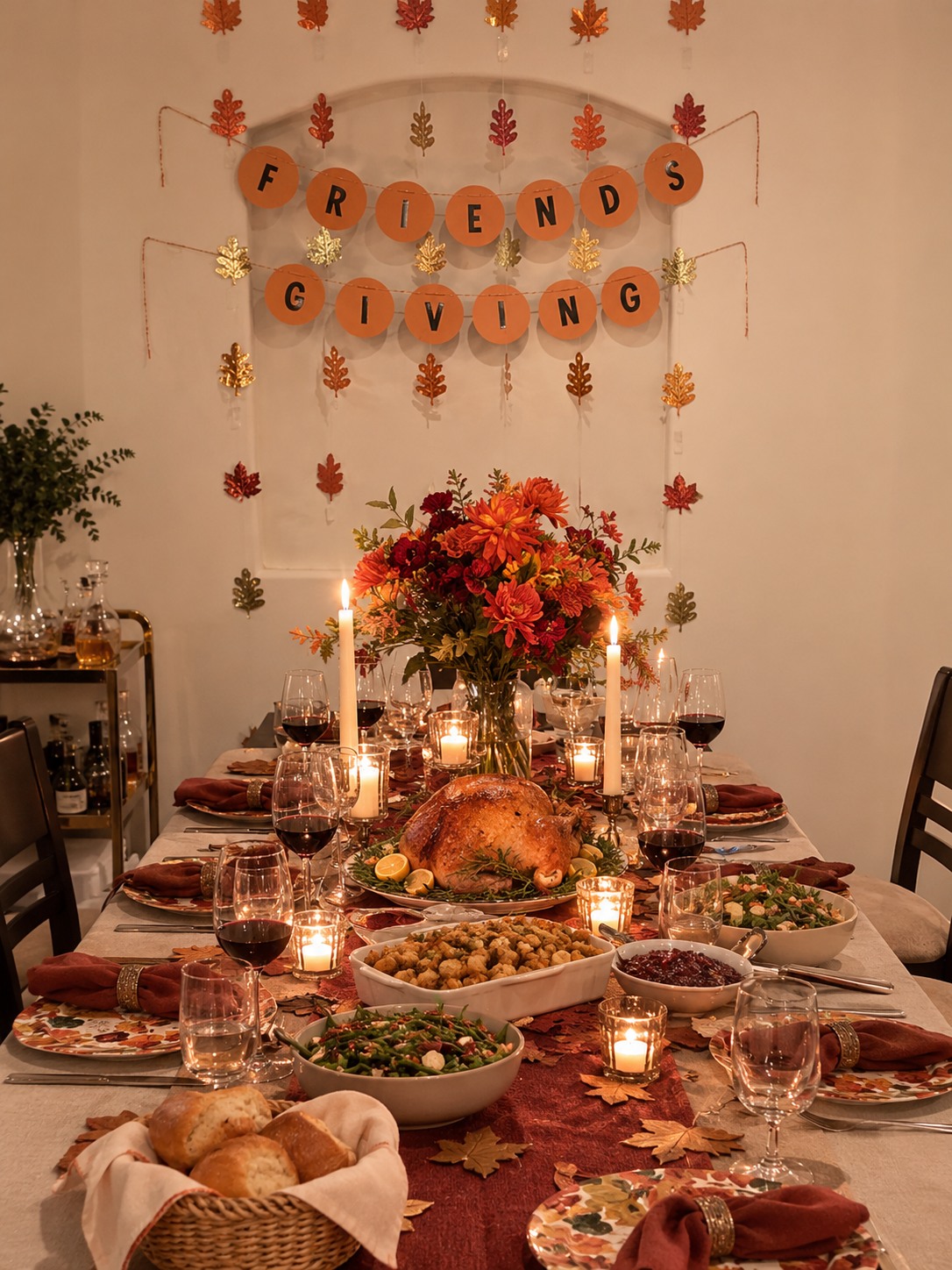
These Friendsgiving food ideas are starting points, not fixed recipes. Choose one direction, then adjust it for your group and how much cooking you want to do.
- The Classic: Familiar and comforting. Serve roast turkey or a smaller roast chicken with mashed potatoes, green beans, cranberry relish and a lentil-and-mushroom bake as the vegetarian main. A store-bought pie makes an easy dessert. Pour warm cider or a simple cider punch and set out sparkling water.
- The Make-Ahead: For a calmer cooking day, choose dishes you can prepare ahead of time. Braised chicken can be cooked ahead and reheated, while a mushroom pot pie gives vegetarian guests a filling main. Add roasted carrots, a green salad, and bread. You can assemble the apple crisp before guests arrive and bake it while you eat. A cranberry-orange spritz works as a signature drink, with the same fruit and sparkling water for a nonalcoholic version.
- The Mostly Store-Bought: Spend less time cooking and more time at the table. Pick up a prepared roast chicken and a savory vegetable tart, then add store-bought mashed potatoes, a salad you can dress at home, and a bakery pie. Put the tart in the oven while you set out the other dishes. Offer wine or beer if your group enjoys it, plus sparkling water with citrus. A menu like this still feels considered because you’ve chosen what to serve and made room for different appetites.
Want more seasonal menu ideas? Our First Dinner Party of Fall Menu shows how to pair a main with seasonal sides and a dessert.
What to Pour
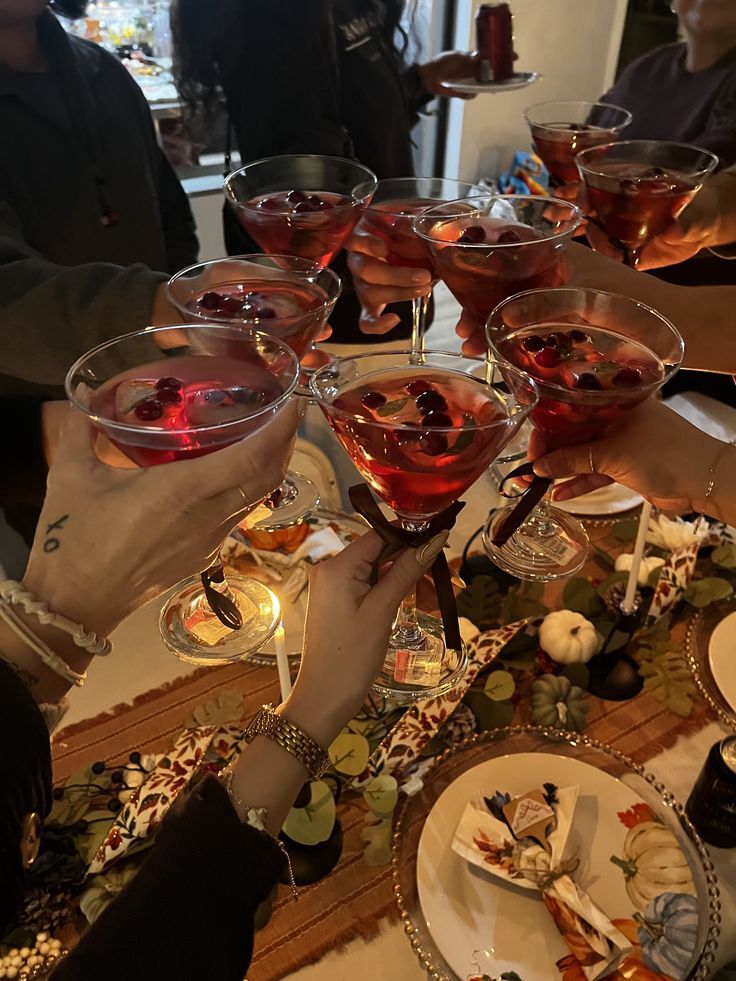
One signature drink is enough to make the menu feel connected without turning drinks into another project. Choose something you can mix in a pitcher, such as a cider spritz or cranberry-orange punch. If you serve alcohol, keep wine or beer available for guests who prefer it.
Make a nonalcoholic option with the same care. You might use the same cider or cranberry base, then top it with sparkling water instead of wine. Serve both in pitchers or clearly labeled bottles so guests can choose without asking.
Set out a pitcher of water, too. A drink station with glasses, water and the signature drink gives guests an easy place to help themselves and keeps you from having to pour every glass.
Want a head start? Open the Friendsgiving Playbook: good food, great company, a cozy atmosphere, a dish for everyone to share and festive drinks—with the plan already built. Playbooks are free with a Partytrick account, so you won’t start from scratch and nothing gets missed.
Shortcuts That Still Feel Special
Buying part of the menu is one of the easiest ways to make the day feel lighter. Pie, rolls, appetizers, and even a prepared main can save you from juggling too many dishes at once. Choose one or two things to make yourself, and let the rest be simple.
The best shortcuts solve a real pinch point. If oven space is tight, buy the dessert. If guests arrive while you’re still cooking, set out a ready-to-serve appetizer. If you’d rather talk than prep, pick up the sides and focus on one homemade main.
And there’s no need to apologize for anything that came from a bakery or the grocery store. Put it on a serving plate, add a few serving utensils, and let the meal be about sharing food together. For more practical ideas, see 10 Secrets to Entertaining with Ease.
Plan for Dietary Needs
Ask about dietary needs when you send the invitation, not after the menu is set. A short note, like “Let me know about any allergies or foods you avoid,” gives guests an easy chance to speak up. If someone mentions a serious allergy, ask what would help them feel comfortable, and let that guide your plans.
One satisfying vegetarian main can make the table more welcoming for everyone, not just vegetarians. It also gives guests who don’t eat the roast something substantial to eat. If you’re not sure what will work, ask the guest directly instead of guessing. Most people are glad you did.
Label dishes with their names and key ingredients, especially anything with common allergens or meat. Keep serving utensils with their dishes and set aside a portion before adding optional toppings when you can. A small card beside each dish answers questions quietly, so no one feels singled out.
Plan Your Friendsgiving with Partytrick

You bring the menu, the date, and the friends. Partytrick gives you a place to start: create a free account, open the Friendsgiving Playbook, set the date, and invite your group. As people choose what to bring, you can adjust the menu around what’s still missing.
Get your free account and start planning your Friendsgiving.
Want more ideas like these? Get hosting tips and gathering inspiration in your inbox.
Frequently Asked Questions
What should you serve at Friendsgiving, and how much food do you need?
Start with your guest count, then plan one main, two or three sides, a dessert and drinks. Add a vegetarian main if it suits your guests. Check each recipe’s stated yield against the number of people coming, and add a little extra for the dishes you know will disappear first. If you’re unsure, a trusted serving-size guide can help you scale up, and you can decide how many leftovers you’d like before you shop.
When should you host Friendsgiving?
Many people host Friendsgiving on the weekend before Thanksgiving, since it’s after most guests have settled their holiday plans but before travel begins. Earlier in November works well too, especially if your friends will be traveling for Thanksgiving. Pick a date as soon as you can and send the invitation early.
Can you host Friendsgiving without turkey?
Yes. Friendsgiving is about the people and the food you share, not the bird. A roast chicken, a make-ahead braise, a savory tart, or a hearty vegetarian main can anchor the meal, especially alongside classic sides and a pie. A quick note about the menu in your invitation helps guests know what to expect.
How do you plan a Friendsgiving potluck?
Choose a date, send the invitation, and ask each guest to pick a category: an appetizer, a side, a dessert, or drinks. You provide the main and anything that’s hard to share, and use the weeks before to settle the menu, shop and prep. Our Friendsgiving potluck timeline walks through the plan week by week.
More articles

Throw a New Year’s Eve Party at Home
Plan a New Year’s Eve party at home with practical tips on the dress code, music, photos, drinks, and the midnight celebration. Start with your guest count and timing, then choose the details that suit your space.
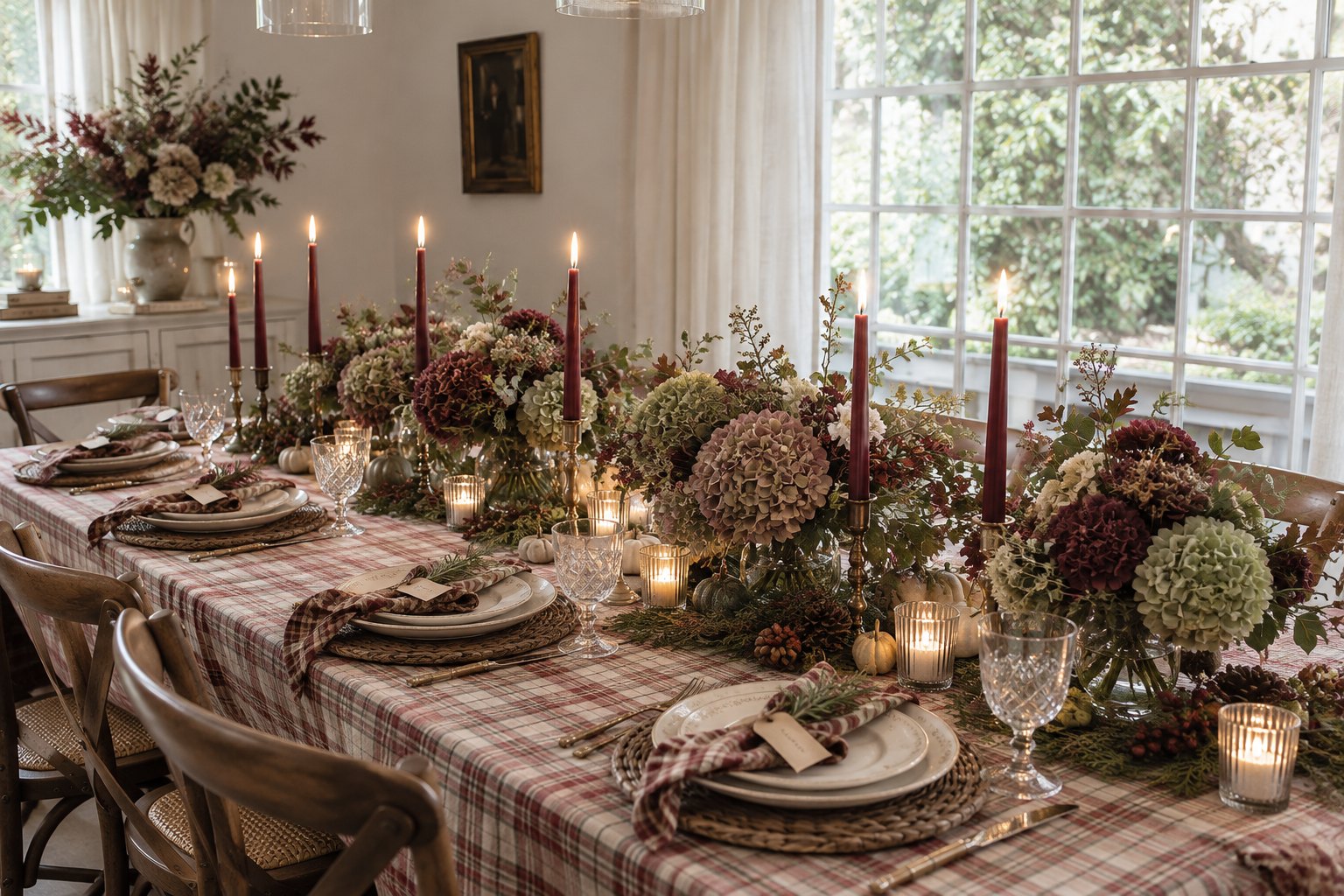
How to Set a Thanksgiving Table and Run the Day: A Simple Hosting Guide
This guide covers how to set a simple Thanksgiving table, choose a serving style, and plan the day so dinner runs smoothly without spending the whole afternoon in the kitchen.

Host How I Host: Stacey Nagy on Thoughtful Details and Cocktail Confidence
Hosting coach Stacey Nagy of Stace’s Libations helps women feel more confident inviting people into their homes. Her approach starts with the occasion, then brings it to life through a welcoming drink, personal details, and a plan that lets the host enjoy the gathering too.

Sign up for expert tips, exclusive content, and the 411 on the latest parties—all straight to your inbox.
Your shortcut to stress-free hosting
Spend less time coordinating and more time actually connecting.